“Tiger Tank Manual: Panzerkampfwagen VI Tiger 1 Ausf.E (SdKfz 181) Model (Owner’s Workshop Manual)” by David Fletcher, David Wiley and Mike Hayden

“Tiger Tank Manual: Panzerkampfwagen VI Tiger 1 Ausf.E (SdKfz 181) Model (Owner’s Workshop Manual)” by David Fletcher, David Wiley and Mike Hayden and published by Zenith Press.  The Tank Museum in South Dorset in the United Kingdom (UK) was in a unique position to write a new chapter in the Tank story with its own discoveries on restoring and running Tiger 131, which is the centerpiece of the manual.

“Tiger Tank Manual” is unique as we follow the story of Tiger 131 from April 1943 in Tunisia in North Africa to its arrival in the UK in October 1943 to its renovation and refurbishing thanks to the national Lottery. It is a short work of only 164 pages. “Tiger Tank Manual” gives an amazing insight and inside look into purchasing, owning, and even operating one of the world’s most outstanding engineering feats and fighting vehicles.

The use of personal remembrances of what it was like to operate and command such a vehicle in wartime gives you a “you were there” feeling. The recollections of what it was like to be on the receiving end of the Tiger’s 88 mmm gun shared by Lieutenant Gundgin in the Foreword really helps set the book’s tone.

The pictures, illustrations, line drawings, statics are amazing. The “Tiger Tank Manual” gives the necessary background on the history and development of the tank. You get the story of Tiger 131 down including forensic and crime scene analysis of the battlefield damage to the tank to include the ammunition used against the tank!

You are given a specular cutaway drawing of the tank from the School of Tank Technology. Note: I am a former US Army Ordnance Corps officer whose military occupational specialty was maintenance. I supported the old US Army M60A2 tank. The detail in “Tiger Tank Manual” rivals any Technical Manual. I cannot over emphasize the quality and variety of the pictures. They left me with the felling I had crawled all over the vehicle as well as I examined every detail inside the tank. They are amazing.

You get a glimpse into the mind of the museum as to why they restored Tiger 131. Again, detail pictures as well as description guides you through the process. Such details as paint selection and viewpoints from volunteers working on the project make you feel part of the project.

The “Tiger tank Manual” includes a chapter on running the tank. The detail given to the start-up procedures and riving the tank makes me want to get in the driver’s seat and take it for a test drive.

The detail given to “The May back Engine” may appear to be overkill to some, but the tank enthusiast or automotive engineer will enjoy the examination of the engine and its auxiliaries. Everything from ventilation to the gearbox and transmission as well as the steering and drive shafts (final drive) is covered.

Having supported annual tank gunnery for several years had my curiosity peak in the chapter devoted to firepower. Excellent coverage is given to tank gunnery from the ammunition down to aiming and firing the gun.
The explanation of the deployment and tactics of the Tiger lets you have an understanding of the German’s strategy. The book concludes with a nice appendix of the surviving Tigers.

While the book may not be for everyone, any military enthusiast will enjoy the book. Any tanker or former tank crewmember will enjoy the book. I believe it would be a worthwhile addition to any military history library as well as any collection dealing with World War II. Additionally, automotive engineers will find the book simply amazing.

Read and reviewed by: Jimmie A. Kepler February 29, 2012. Note: Jimmie is honorably discharged as a Captain in the ordnance Corps US Army where he served as a maintenance office and supported a tank battalion (2nd Bn 77th Armor 2nd Brigade 9th Infantry Division) in 1978.

February 28, 2014

It’s Friday, February 28, 2014. It is the 59th day of the year. It is a cool 40 degrees in Dallas this morning at 6 AM. Fortunately, we are not as cold as our neighbors in the northern plains and upper Midwest. They have all those temperatures that begin with a minus sign before the numbers. It is plenty cold for me though. My maternal family’s arrival in Texas predates the Texas Revolution in 1836. I jokingly say as a result I get cold when it gets below 90 degrees. I guess that is why I love the Texas heat of July and August.

This morning as I am typing I am listening to one of my favorite groups of all time, The Alan Parson Project. The song I have on a continuous play loop this morning is “Don’t Answer Me”. It is a 1984 song from the album Ammonia Avenue. It rose to #15 on the Billboard charts in the United States. This was the last Billboard Top 20 hit for the Alan Parsons Project. The music video – which was the first music video from the Alan Parsons Project – was rendered in comic book style, with art and animation by MW Kaluta.

On this date in 1991 the first Gulf War (code-named Operation Desert Storm) ended. In 2001 the Nisqually Earthquake measuring 6.8 on the Richter Scale hit the Nisqually Valley and the Seattle, Tacoma, and Olympia area of the U.S. state of Washington. As a former US Army officer I paid attention to the Gulf War. Some of the men and women I served with back in the 1970s were still on active duty at the time. While in the US Army I was stationed at then Fort Lewis, Washington (now Joint Reserve Base Lewis-McChord. It is located in the heart of the Nisqually Valley. The Nisqually River flowing through the west side of the base with its frigid waters coming straight off the glacier with the same name.

The time is now 6:45 AM. I did a simple time check as I am writing this before going to my day job.

This week my acquaintances Terry Burns and Linda Yezak had the new book released. Writing in Obedience – A Primer for Christian Fiction Writers is the title. I own the paperback and the Kindle version. It is available through Amazon at http://www.amazon.com/Writing-Obedience-Christian-Fiction-Writers/dp/1941103138. The book is good. I have read over half to date.

Another writing acquaintance with a new release Mur Lafferty. is Her latest book, set for release March 4, is The Ghost Train to New Orléans. She won the John W. Campbell Award for Best New Writer 2013. It is available for preorder at http://www.amazon.com/Ghost-Train-Orleans-Shambling-Guides/dp/0316221147. I am a long time Mur fan. I own her earlier book The Shambling Guide to New York City. It is available on Amazon at http://www.amazon.com/Shambling-Guide-York-City-Guides/dp/0316221171/ref=pd_bxgy_b_text_y. The book is awesome. it is the first Urban Fantasy book I ever read. Mur tells a great story.

Well, it is 7 AM. It’s time to get to the day job.

The Prairie Dogs Have Coal Miners’ Helmets with Lights and Other Stories

The Prairie Dogs Have Coal Miners’ Helmets With Lights and Other Stories

The Prairie Dogs Have Coal Miners' Helmets With Lights and Other Stories
The Prairie Dogs Have Coal Miners’ Helmets With Lights and Other Stories

Today is Saturday, February 8, 2014. It is a Saturday. After a week of cold miserable weather, we had a reprieve this afternoon. The sun came out after spending the morning behind clouds. Temperatures that started at freezing made their way to 52 degrees at 4:47 PM. After days with temperatures staying below freezing it felt like a heat wave.

My Saturday was similar to many others. I awoke later than usual today. I slept until 7:15 AM. Instead of heading for coffee at Starbucks, I had breakfast at home as well as my morning caffeine. I watched some of the Olympics opening ceremonies on DVR while I ate a bowl of Cheerios with dried cherries. I remained at home until my wife departed for work.

After she left I loaded my laptop and myself into my Ford Taurus. I headed to my favorite Starbucks for a morning of editing and formatting. I had a tall blonde roast coffee. I spoke with my friend Joanne and her husband. She is a local bank branch manager I see most mornings when I stop in for coffee.

I put the last touches on the formatting of my book “The Prairie Dogs Have Coal Miners’ Helmets With Lights and Other Stories”. It is available on Kindle February 9, 2014 in the United States, India, United Kingdom, Germany, France, Spain, Italy, Japan, Brazil, Canada, Mexico, and Australia.

Maybe the hardest part of the book was the dedication. I dedicated it to:

  • My wife Benita B. Kepler, who permits me to pursue my passion of writing.
  • My poet friend and beta reader Karen Vandiver Garrison for her encouragement.
  • My writing coach Linda Lee Tritton and the Wholehearted Writing Group: Marcie Aber, Sabrina “Sam” Chapman, Amy Koetter, Talya Tate Boerner and Storm Ricamore. I told them thank you for their beta reading and suggestions. I have grown to love them like family.

At 1:30 PM, I left Starbucks. I went to the gasoline station and filled my car up with gas.

Next, I returned home. My wife was still at work. My kitty greeted me. She was looking for tuna. I ate leftover meat loaf to her disappointment.

I retired to my home office and did more editing while watching/listening to The Seekers 25th Anniversary Reunion Concert from the early 1990s.

About 5:45 PM I moved from my office to the kitchen. I prepared pork chops, corn, green beans and pineapple for the evening meal. I had it ready when my wife came home from work about 6:45 PM.

Following dinner, I watched the conclusion of the Olympics opening ceremonies on DVR. I then retired to the kitchen. I put up the clean dishes in the dishwasher. I next rinsed the dinner dishes and placed them in the dishwasher. I washed the pots and pans in the sink. I made a pitcher of iced tea as well as taking up four trays of ice. I do not own an ice maker other than four ice trays.

I read the short story “Dehydration” by Grayson Queen. It was very interesting. It deals with the premise of what happens if the earth’s water supply becomes non-potable.

I also finalized arrangements for going to see the Dallas Symphony and Bernadette Peters tomorrow. The show is after church. It is at 2:30 PM.

Well, it’s about time for bed. In the name of shameless self-promotion, buy my book “The Prairie Dogs Have Coal Miners’ Helmets with Lights and Other Stories”. It’s available on Kindle at http://www.amazon.com/Prairie-Miners-Helmets-Lights-Stories-ebook/dp/B00IBRLH74/.

Photo Credit: The cover image use is with permission under Creative Commons Share-Alike License CC-BY-SA 3.0. Joe Ravi is the photographer.

Book Review: Mission to Berlin: The American Airmen Who Struck the Heart of Hitler’s Reich By Robert F. Dorr


Robert F. Dorr’s “Mission to Berlin” documents the mission that took place on February 3, 1945 to bomb Berlin, the capital of Nazi Germany.  The author does a very skilful job of telling the stories of the men who flew on it. He shares the incredible story of American fearlessness in the last months of World War II. The size of the air battle challenges our belief as in excess of 1,000 bombers and multiple-hundreds of fighter aircraft originating from Allied bases journey to the heart of Nazi Germany. You also get a good overview and understanding of the structure and operations of the United States Eighth Air Force.

Author Robert F. Dorr gives a detailed report of its evolution. He takes us from the pre-takeoff preparation and activities to the concluding landing.  The book is well paced. The basic structure of the book is spellbinding narrative. The storyline presents a mesmerizing description of many of the aviators on this historic mission. His use of primary source references such as first person interviews and personal letters adds warmth and the human touch to the narrative.

I found the way Mr. Dorr combines his interviews and letters with the detailed duties of each member of the crew a great way to explain the duties and procedures of the B-17 crew. The way he tells the story you feel as if you are there from take off to landing seeing the point of view of each member of the crew. He does an amazing job of drawing the reader into the life of the crew. This alone is reason to read the book.

Another reason to read the book includes the good picture of how the war affected the young crews, the technical side of the B-17 and its development and deployment as well as the evolution of fighting strategies. It was fascinating to see the change in philosophy as to the use of the fighters and to see how the Thunderbolts and especially the P-51s made a great difference in the  survival rates of the B-17s once they were able to escort all the way to Berlin.

I enjoyed the appendix that explained “What Happened to Them?” It told us of what key personalities mentioned in the book did after the war. It was a pleasant addition to the book.

This is an outstanding book.  Every World War II buff as well as aviation enthusiast will want it in their library. This is the second book I have read written by Robert F. Dorr. The first was “Hell Hawks!” which I also strongly recommend.  Zenith Press is the publisher.

When Washington Burned: An Illustrated History of the War of 1812

One of the least known wars in United States or for that matter British history is the War of 1812.
The War of 1812 was a rather disorderly event. At times it had several minor campaigns going on at the same time. They weren’t coordinated, were hundreds of miles apart and had little or nothing to do with the other campaigns.
The author has produced an understandable account out of this disjointed war. His narrative is well organized. The structure used has each chapter covering a distinct area. They are restricted to a geographic area.  The genius of this approach is let you keep needed focus without covering everything happening on all fronts at the same time. The coverage of the Naval engagements is excellent. They receive their separate chapters.
The illustrations are first-rate. The majority of the images are present-day. He makes skillful use of maps to show the more intricate campaigns. This is an excellent single volume history of the War of 1812. It explains what happened. It explains why it happened. The coverage is balanced with US and British material. The book would be an great addition for community libraries, school libraries and is a must for the personal library of military historians. It would also make a nice “coffee table book”.
Arnold Blumberg and Casemate Publishing have provide a well needed, quality book on the War of 1812.

How the North Won: A Military History of the Civil War

How the North Won: A Military History of the Civil War by Herman Hattaway and Archer Jones is a scholarly look at the Civil War. Hattaway and Jones have produced a great book on Civil War logistics, planning, and administration. They authors seem to focus more on the logistics and strategy side over the tactical side.

The book was very good, but at times, it was a dry recitation of chronology, dull facts, and statistics. I had to force my way to complete the book, and it took two attempts to get it read. Most copies of the book will collect dust on some university library bookshelf. It is too deep and too dry for most readers. Better to borrow this book from your library than spend your money purchasing the book.

Review: How the North Won: A Military History of the Civil War by Herman Hattaway and Archer Jones

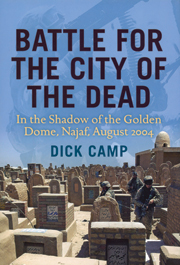
Battle for the City of the Dead: In the Shadow of the Golden Dome, Najaf, August 2004 by Dick Camp

The year was 2004. During the spring and summer the Iraqi nation was overwhelmed with violence. The nation’s Shiites and Sunnis headlined the sectarian fighting. The Army of Iraq had been disbanded by the United States Proconsul. The results of his actions were infusing a large number of angry young men into the streets of the population centers in Iraq. These men had no jobs skills, no jobs, and no prospects for employment. These men were literally angry in the streets. The clergy fueled their anger which developed into a rage and campaign for jihad against the United States and all “occupation forces”. 
By August 2004, Muqtada Al-Sadr, a Shiite cleric, called upon thousands of Mahdi Militia, his armed followers and de facto private army, to resist the occupation. Fighting would break out in several locations. The holy city of Najaf, the site of the largest Moslem cemetery in the world, and the Imam Ali Mosque were major sites of fighting. U.S. forces found themselves fighting in 120-degree heat. The battleground was through a tangle of crypts, mausoleums, and crumbling graves. The fight was rough. It had the religious zealots against the motivated and disciplined United States Army and Marine Corps troopers. It makes for a spellbinding account of Americans in battle.
The book itself is excellent. Dick Camp tells an excellent story. The quality of the book is remarkable. I am referring to everything from the writing, the large amount of high quality color pictures, and even quality of the paper the book on which the book is printed.

A Soldier Reports

The book is the memoir of one of America’s most controversial military leaders. I found it refreshing to read of his background and upbringing. He briefly covers his days as a cadet at West Point where he graduated in 1936, the horse dawn artillery days, and his role in World War II where he fought with distinction in North Africa and Europe with the Ninth Division. We see his fast rise to a Brigadier General before thirty years of age and later (1952–53) in role in the Korean War. He served as superintendent of West Point (1960–64), attained (1964) the rank of general and commanded (1964–68) U.S. military forces in Vietnam. He then assumed the position of army chief of staff, which he held until his retirement in 1972.

I was saddened as I read Westmoreland’s comments on one of the early killed in action lists that crossed his desk. It included 2LT John J. Pershing III, grandson of World War I supreme commanding general “Blackjack” Pershing. The book looks at the Viet-Nam war from Westmoreland’s point of view. It explains his decision-making process. It is more than an after action report. It is worth reading if you are a political or military history junkie. His relationship with Lyndon Johnson and Robert McNamara are not covered in the detail I would have liked. This is the story of a decent man, giving his best to his country in difficult times.

A Life in a Year: The American Infantryman in Vietnam, 1965-1972

Wisconsin high school teacher James R. Ebert does a masterful job as he combines interviews and printed primary sources in this remarkable telling of the infantryman’s experience during the Vietnam War. Ebert tells the story of the US Army and a few US Marine infantrymen during the Vietnam War. He takes their story from induction into the service through basic and advanced individual training, arrival in Vietnam, their first combat experiences, the first killed in action they experience, in some cases the soldier’s death, and the freedom birds that take them back to the world. Ebert points out while infantryman accounted for less than 10% of the American troops in Vietnam, the infantry suffered more than 80% of the losses.

Ebert uses an interesting technique starting every chapter with a letter by Leonard Dutcher to his parents. Dutcher just wanted to do his part for God and country and go home at the end of his 12-month tour (13 for Marines). In the last chapter, we find out that Dutcher was killed. It caught me off guard and really added to the impact of the book. Ebert takes many of the soldiers and Marines experiences word for word from the individual himself through interviews or letters. It is a collective look at similarities of the many infantry soldiers and Marines in the war. It is a very personal account from many points of view.

This is an important book in Vietnam War literature. This is what the grunts really went through. I was left with somewhat of feeling of guilt from reading the book. Why? I graduated high school in 1971. Some of my high classmates went to Vietnam and fought. Everett Maxwell was killed in action. I went to college and was ultimately commissioned a second lieutenant in the infantry, went through airborne school and served three years active duty. My becoming an officer deferred my entry on active duty from 1971 to 1975. This is the reason for my reflective thoughts.

Book review of: A Life in a Year: The American Infantryman in Vietnam, 1965-1972 by James R. Ebert