I read Band of Brothers by Stephen E. Ambrose in August 1996. This is one of the most read and popular books in the last ten years due to the HBO mini series based on the book. The History Channel also periodically shows the mini series. The book is better than the mini series. It tells the story of Easy Company 506th Parachute Infantry Regiment that ultimately became part of the 101st Airborne Division. I enjoyed the book because of the focus on the people in the unit. It has reached cult like status. Read by Jimmie A. Kepler.
Category: US Military History
The Wild Blue: The Men and Boys Who Flew the B-24s Over Germany by Stephen E. Ambrose
“The Wild Blue: The Men and Boys Who Flew the B-24s Over Germany” by Stephen E. Ambrose is controversial because some scholars point out Ambrose has lifted the work of other authors without placing said work inside “quotation” marks. That is a tragic error. Is it an error of omission or commission? I do not know. I do know it is ethically wrong. The book tells the story of former US Presidential candidate and US Senator George McGovern. It tells of McGovern’s upbringing, his journey to college, the outbreak of World War II, his falling in love and marriage, his joining the US Army Air Corps, his training as a pilot, and his combat deployment and action where he was based out of Italy bombing the Axis war machine. It is written in Ambrose’s wonderful narrative style. It is highly readable and entertaining. Read in January 2005.
Company Commander: The Classic Infantry Memoir of World War II by Charles B. MacDonald
Company Commander: The Classic Infantry Memoir of World War II by Charles B. MacDonald. I highly recommend Company Commander: The Classic Infantry Memoir of World War II by Charles B. MacDonald. At just 21 years of age, Captain Charles B. MacDonald first commanded I Company, 3 Battalion 23rd Infantry, 2nd Infantry Division from October 1944 to January 1945 and later G Company, 2 Battalion 23rd Infantry, 2nd Infantry Division from March to May 1945. This memoir was written in 1947 when recollections were still sharp. It resulted in a very detailed account of what it was like to take command of a line infantry company and lead it into battle. The book gives us template for writing a personal military memoir.
It is by far the finest memoir of any junior officer in World War II. Charles MacDonald does a great job of keeping his focus on his own experiences. He does not speculate or waste my time by giving conjecture on the big picture. We only have first hand information from the events of his personal participation. He sticks to what life was like for a junior officer in command of an infantry company, sleepless, hungry, dirty, stressful, and very dangerous. He takes us from the Siegfried Line in the Ardennes, through the Battle of the Bulge, and to the end of the war in the Czechoslovakia.
This book is a must-read for all army officers who seek to command at company-level and it is informative for military historians as well. It is still required reading at West Point and on the company level officer (second lieutenant, first lieutenant, and captain) recommended reading list by the U.S. Army today. Upon this book’s publication in 1947, Charles B. MacDonald was invited to join the U.S. Army Center of Military History as a civilian historian, the start of a career during which he wrote three of the official histories of World War II in Europe and supervised the preparation of others. The book is simply the best. Read and reviewed by Jimmie A. Kepler in June 2006.
One Soldier’s Story: A Memoir by Robert Dole

I found “One Soldier’s Story” by Robert Dole in the new book section of The Colony Public Library. The book tells the story of former US Senator and Republican presidential candidate Robert Dole, of Kansas. It shares tales of his growing up in Russell, Kansas. We learn of his running track, attending high school, working as a soda jerk, and attending Kansas University (KU). He opens the window to his experiences at KU where we see him running track, joining a fraternity, working odd jobs to help pay for his college, buying a phonograph, and experiencing the bombing of Pearl Harbor.
His story continues where he struggles with the choice of joining the US Army Air Corps or the US Army infantry. He joins the Army, goes through Officer Candidate School, and ultimately becomes an infantry officer. His tour of duty in World War II takes him to the Italian theater of the war. In Italy, his life is forever altered. He receives a critical wound while on a combat mission.
The remainder of “One Soldier’s Story” tells of his struggles through hospitalization, evacuation, and transport to the USA, rehabilitation, depression, learning to walk again, falling in love and his first marriage, return to Russell, Kansas and his daily challenges. We follow Bob Dole through his return to complete his college degree and his decision to attend law school. We experience his building a career as a young lawyer, the decision to run for political office, and his ultimate service as a US Senator, and being both a vice presidential candidate (1976) and presidential candidate (1996).
Whether you like Bob Dole’s conservative politics or not, you will find his story very inspirational. This extremely well written memoir is hard to put down. Read in March 2006 by Jimmie A. Kepler.
Jungle in Black by Steve Macguire

Jungle in Black is the memoir of Steve Maguire. McGuire was a young, gung-ho, Airborne Ranger who lead a 9th Infantry Division battalion Reconnaissance Platoon in the 6th Battalion, 31st Infantry in the Mekong Delta. The story opens with drawn-out and generic combat descriptions that lead up to Maguire’s wounding. The rest of the book covers his treatment. We learn that an exploding Vietcong mine blinded him for life. This is an honest first-person account that never wallows in self-pity. Unfortunately, he in no way offers enough background about his life to round out his person. He missed the mark with his book. He paints a broad description of the early stages of rehab. The description covers the usual male boasting, lust for nurses and hopes dashed by physicians not healing or restoring his sight. He fails to feature how he coped with his loss of sight and earned a doctorate in psychology (not mentioned until in an epilogue). This could have been a very inspirational and motivational story; instead it’s just another war story memoir.
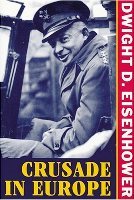
Crusade in Europe by Dwight David Eisenhower

Crusade in Europe is General Dwight David Eisenhower’s memoir from the early days of World War II through the early post-war. His story and observations are crucial to an understanding of the Great Crusade. Among memoirs, this is a gem.
General Eisenhower takes the reader along with him through each stage of the Crusade. Having attracted attention for his performance in Army maneuvers in Louisiana in 1940, General Eisenhower was called to Washington immediately after Pearl Harbor because of his recent experience in the Philippines. He was first assigned to work on plans for the Pacific. At this point the reader is reminded that, in contrast to the later Germany First Policy, the American public, for a time, screamed for revenge on Japan before dealing with Germany.
Assigned to command Operation Torch, the invasion of French North Africa in 1942, General Eisenhower was charged with obtaining Allied Cooperation. He was plunged into the quagmire of French politics. The disappointing involvement with General Giraud presented an intra-allied problem, as did cooperation of Admiral Darlan, who while too helpful to rebuff, brought with him the stigma of association with a collaborator. The age-old Arab-Jewish hostility further complicated the administration of the liberated territory.
With North Africa cleared out, General Eisenhower was charged with the conquest of Sicily. Management of the Patton-Montgomery rivalry was a major challenge of the campaign. Success having been achieved, the Patton slapping incident in Sicily forced General Eisenhower to reprimand a close friend while threatening to deprive him of one of his most effective Army commanders.
Speculation that General Eisenhower would return to the Washington as Chief Of Staff while General Marshall commanded Overlord, the invasion of Europe, distracted General Eisenhower’s attention from problems at hand. General Eisenhower’s eventual appointment to command Overlord forced him to leave the Mediterranean while the Italian campaign was still in doubt. Upon arrival in England he immediately switched gears to plan the size, timing, supply and location of the invasion of France.
With the invasion ashore, General Eisenhower skillfully managed his coalition of impetuous commanders in their march across Europe. General Eisenhower brings the reader into the thought processes and conferences leading to decisions on the liberation of Paris, Operation Market-Garden, and the Battle of The Bulge.
Americans are familiar with Patton’s claim that, with supplies, he could capture Berlin and win the war. General Eisenhower relates that Monty bothered him with similarly impractical suggestions. He then explains why the proposals were doomed to failure. Spirited arguments with the British over Project Anvil (Invasion of Southern France) come within the reader’s vision through General Eisenhower’s eyes.
The greatest criticism of General Eisenhower’s wartime leadership is reserved for questions about whether the Western Allies should have advanced further to limit the Red Army’s area of occupation. General Eisenhower assesses the claims and presents support for his decisions.
After V-E Day, General Eisenhower’s role shifted more into that of a statesman as he attempted to obtain cooperation with the Russians over the administration of occupied Germany.
Some things come clearly through the pages of this book. The reader is constantly impressed with the importance of supplies, bringing to mind the adage that “Amateurs speak of tactics, professionals speak of logistics.” Despite later controversies, General Eisenhower’s admiration for General George Marshall is made clear on the pages of this book. Written in 1948, I find the statement that General Eisenhower disagreed with many of FDR’s domestic policies to be surprising and a hint of his later political initiatives. Crusade in Europe is written in a very clear, easy to read and follow style. It never becomes bogged down in boring details. It does not have any mention of his relationship with his female English army driver. Read by Jimmie A. Kepler in 2004.