Here’s how can know Jesus Christ as your Lord and Savior and be sure heaven is your eternal home. Click the link to read my personal story of accepting Jesus –My Story.
Disclosure: I am an Amazon affiliate. If you purchase using the links in the article I receive a small commission.
Books: Click on BOOKS to see some of the books I’ve written or where I’ve been a contributor.
Here’s how can know Jesus Christ as your Lord and Savior and be sure heaven is your eternal home. Click the link to read my personal story of accepting Jesus –My Story.
Disclosure: I am an Amazon affiliate. If you purchase using the links in the article I receive a small commission.
Books: Click on BOOKS to see some of the books I’ve written or where I’ve been a contributor.
Here’s how can know Jesus Christ as your Lord and Savior and be sure heaven is your eternal home. Click the link to read my personal story of accepting Jesus –My Story.
Disclosure: I am an Amazon affiliate. If you purchase using the links in the article I receive a small commission.
Here’s how can know Jesus Christ as your Lord and Savior and be sure heaven is your eternal home. Click the link to read my personal story of accepting Jesus –My Story.
Disclosure: I am an Amazon affiliate. If you purchase using the links in the article I receive a small commission.
Books: Click on BOOKS to see some of the books I’ve written or where I’ve been a contributor.
Here’s how can know Jesus Christ as your Lord and Savior and be sure heaven is your eternal home. Click the link to read my personal story of accepting Jesus –My Story.
Disclosure: I am an Amazon affiliate. If you purchase using the links in the article I receive a small commission.
Books: Click on BOOKS to see some of the books I’ve written or where I’ve been a contributor.
.
My late wife Benita and I at her high school senior prom in 1974. She graduated high school that spring. We married December 1974. She was 18-years old and I was 21-years old. I was a December university graduate.
Bible Verse:
“Be of good courage, and he shall strengthen your heart, all ye that hope in the Lord.”
Psalm 31:24 (KJV)
My Story:
Countless people throughout history have drawn strength and encouragement from the words of Psalm 31:24, including my late wife after a diagnosis of terminal melanoma cancer.
When we first received the news, it was devastating. The doctors told us she had advanced stage three melanoma cancer. After the initial surgery, we were told if it recurred, there was little they could do to cure my wife’s cancer. My wife’s name was Benita. I called her “Miss Benita.”
The melanoma recurred within months. The oncologist told us to focus on making Miss Benita comfortable. Extending her life with as much quality as we could should be our focus. We were both overwhelmed with fear and sadness, unsure of what the future held.
But during our pain, we turned to God for comfort and guidance. We began reading the Bible and praying for strength and peace.
We found comfort in the words of Psalm 31:24, which reminded us to be strong and take heart, even in the face of such difficult circumstances.
As we navigated this new reality, we discovered the power of community through our coworkers and our Prestonwood Baptist Church Bible fellowship class. Our friends and family rallied around us, providing love, support, and practical help. They prayed with us, brought us meals, and sat with us in silence when words failed. Their presence gave us strength and hope, and we knew we were not alone on this journey.
Despite the challenges we faced, Miss Benita’s faith remained strong. She continued to trust in God, even when things seemed impossible. Her unwavering faith inspired me and many others who knew her.
As her illness progressed, Miss Benita’s physical strength faded. But her spirit remained strong, and she continued to be a beacon of hope and encouragement to all those around her. She would email and send cards to people on our church’s prayer list. She did this even into the first two weeks of the month she was in hospice care.
Miss Benita’s melanoma spread to her brain. Surgery removed a melanoma tumor.
It recurred within ninety days, causing her to lose the ability to read and write.
She never lost sight of the fact that her ultimate hope was in the Lord, and she knew that even in death, she would be with Him.
In her last days, her faith shone even brighter.
She was at peace, knowing that she would soon be with her Lord and Savior.
She lived her life showing her faith. Countless people were positively affected. Her legacy would continue long after she was gone.
As I reflect on Miss Benita’s life and her journey through cancer, I am reminded of the power of faith and community. I am inspired by her courage and her unwavering trust in God, even in the face of death. Many people supported us during this difficult time, providing love, comfort, and hope when we needed it most.
Psalm 31:24 is not just a verse on a page. It is a reminder of the strength and hope that we can find in God, even in the most difficult of circumstances. It is a call to be strong and take heart, even when our hearts are breaking. And it is a reminder that our hope is in the Lord, who has overcome death and has promised us eternal life.
Miss Benita’s journey through cancer taught our family and friends faith in God, community, and hope in the Lord Jesus Christ. It reminded us that even in the face of death, we can find peace and strength in God.
And it showed us we do not measure our legacy by the number of days we live, but by the impact we have on others. May Miss Benita’s life and faith continue to inspire us all to be strong, take heart, and hope in the Lord.
Who wrote Psalm 31:24 and when was it written?
Scholars attribute Psalm 31:24 to King David. He wrote many of the Psalms in the Hebrew Bible.
The exact date of composition is uncertain, as the Psalms were likely written over a period of several centuries. Biblical scholars believe that the Psalms’ compilation and editing into their current form occurred during the Second Temple period (516 BC to 70 AD).
What is the context of Psalm 31:24?
Psalm 31:24 is the last verse of Psalm 31. It is a psalm of David. The psalm is a prayer for help and deliverance in the face of enemies and affliction. In this psalm, David expresses his trust in God. We see that even during his troubles, he asks for God’s mercy and protection.
The context of Psalm 31:24 is one of confidence and encouragement. David affirms his trust in God and encourages others to do the same, saying, “Be strong and take heart, all you who hope in the Lord.”
Faced with difficulties and opposition, David is reminding himself and others to stay steadfast in their faith. He says to rely on God’s strength and grace.
This verse is a fitting conclusion to the psalm, which began with a plea for help and ends declaring trust and hope in God.
What is the meaning of Psalm 31:24?
Psalm 31:24 is part of a psalm that expresses the psalmist’s trust in God during a time of distress and persecution.
In the preceding verses, David laments on his troubles and his enemies, who are trying to harm him. However, in this verse, he encourages himself and others who have put their hope in God to be strong and take heart.
The verse is a message of hope and encouragement for those who trust in God. It reminds believers they can be strong and take heart because of their faith in God’s goodness and faithfulness.
What does Psalm 31:24 phrase “Be of good courage,” mean?
“Be of good courage” encourages readers to remain resolute in their faith. It reminds them they have the inner strength to face whatever challenges come their way, and that they should rely on that strength to carry them through.
What does Psalm 31:24 “he shall strengthen your heart” mean?
“let your heart take courage,” reminds readers that courage is not just a matter of physical strength, but also of emotional fortitude. It encourages them to draw on the courage that comes from a deep and abiding faith in the Lord, which can help them overcome fear and doubt.
What does Psalm 31:24 “all you who hope in the Lord” mean?
“all you who hope in the Lord,” reminds readers they are not alone in their struggles. By placing their hope in God, they can find comfort and strength knowing that they are part of a larger community of believers who are also relying on God for support and guidance.
What is the difference in biblical translations of Psalm 31:24 (KJV, NIV & ESV)
Psalm 31:24KJV biblical translation says:
“Be of good courage, and he shall strengthen your heart, all ye that hope in the Lord.”
Psalm 31:24 KJV
Psalm 31:24 NIV biblical translation says:
“Be strong and take heart, all you who hope in the Lord.”
Psalm 31:24 NIV
Psalm 31:24ESV biblical translation says:
Be strong, and let your heart take courage, all you who wait for the Lord!
Psalm 31:24 ESV
How does Psalm 31:24 give encouragement?
Psalm 31:24 says, “Be strong and let your heart take courage, all you who hope in the Lord.” This verse provides encouragement to those who are facing difficult situations by reminding them to have faith and trust in the Lord.
It is a reminder that no matter what challenges they face, they are not alone, and that they can find hope and strength in their faith.
How can I apply Psalm 31:24 to my life?
Here are a few ways you can apply this verse to your life:
Find strength in God: When faced with challenges or difficult situations, turn to God for strength. Place your trust in Him and draw on His power to help you persevere.
Take heart: Don’t give up! No matter how tough things may seem, keep your hope and faith alive. Remember that God is with you and will guide you through difficult times.
Trust in the Lord: Believe in God’s goodness and love, and trust that He will provide for you. Have faith in His plans for your life, even when you can’t see the way forward.
Encourage others: Share the message of this verse with others who may be struggling. Remind them they are not alone, and that God is always there to support them.
Psalm 31:24 is a powerful reminder of the strength and hope we can find in God. By putting our trust in Him, we can overcome any obstacle and face the future with confidence.
A model or example prayer using Psalm 31:24
Psalm 31:24 is a verse from the Bible that reads, “Be of good courage, and He shall strengthen your heart, all ye that hope in the Lord.” A Psalm 31:24 prayer is a prayer inspired by this verse, which expresses a sense of trust, courage, and hope in God.
Here is an example of a Psalm 31:24 prayer:
Dear God,
With a heart full of hope and trust in you, I come to you today. I pray you give me the courage I need to face the challenges of this day and that you strengthen my heart so that I may persevere through the trials that come my way.
I know that with you by my side, I have nothing to fear, and I can face whatever comes my way with confidence and strength. I pray you fill me with your peace and surround me with your love, so that I may be a beacon of light to those around me who are also struggling.
Thank you for your constant presence in my life, and for the hope that I find in you. I trust in your love and your power to guide me through this day and all the days to come.
In Jesus’ name, Amen.
Conclusion:
Psalm 31:24 provides encouragement by reminding readers to stay strong, have courage, and put their trust in the Lord. It is a reminder that no matter what challenges they face, they are not alone, and that they can find hope and strength in their faith
Today’s article is from the forthcoming book: “Hope: How to Have Hope During Times of Hardship | The Bible Speaks to Life Issues, Book Three” by Jimmie Aaron Kepler, Ed.D. from Poetry and Prayer Press (c) 2023
“Now faith is the substance of things hoped for, the evidence of things not seen.”
Hebrews 11:1 (KJV)
My Story
Early in our marriage, we only owned one car. My spouse rode to work with a friend. Her friend was glad to get the money my wife gave her each week. The cash helped with the price of gasoline.
After I finished graduate school, we moved halfway across America to a new job. We only owned one car. My work required me to use it to visit the many hospitals in the greater metro area. My wife decided she would stay home with our two preschool age sons.
Not having a second car left my wife stranded at home with the young children. She could only go shopping in the evenings. She couldn’t do routine life maintenance activities like doctor’s appointments or attending an exercise class with either juggling our schedules and car usage or getting help from a friend.
One day, I suggested we consider getting a second car. Yes, the increased cost of insurance, fuel and maintenance, not to mention the purchase price, would be expensive.
“We need to pray about purchasing get the car. God’s leadership can tell us if we should go in debt for a new car or try to see what we could afford with our small savings,” I said.
She agreed. So we prayed and waited.
The very next Sunday at church, a HAM radio friend of mine (we were both FCC licensed amateur radio operators) approached me. He was a deacon in our church, a bachelor, and twenty years older than me.
“Jim,” he said. “I’ve ordered a new car. The dealer said it’ll take forty-five to sixty days before it arrives.”
“Great,” I replied. I hadn’t connected the dots of our prayer for a car and this conversation.
“I was wondering if you’d like my old car. It’s low mileage, doesn’t have much wear with me not being married. Besides, I’ve seen your wife buying groceries in the evening when I do my shopping.”
I listened intently.
His next words were, “God, impressed on me to offer you my old car. I don’t need two.”
I hesitated.
He continued, “The dealer offered little for it as a trade in as it’s ten years old. The mileage is low. It has new tires, and I had the oil changed. I thought maybe you’d like a second car. You can give me ten dollars a Sunday for the next two years. I’ll even pay for the title transfer to help.”
Only God.
“I need to check with my wife,” I said.
“Let me know,” he replied.
“Thank you,” I added.
My wife agreed.
God was meeting our needs. God provided us with a second car.
Who wrote Hebrews 11:1 and when was it written?
The author of the Book of Hebrews in the New Testament of the Bible is unknown. Many scholars attribute the book to the apostle Paul because of an internal reference to “our brother Timothy” in Hebrews 13:23. Some scholars have disputed this attribution since the second century and there is no decisive evidence for the authorship.
The exact date of the Book of Hebrews is unknown. The last half of the first century is the date most scholars assign to its writing.
What is the context of Hebrews 11:1?
The context of Hebrews 11:1 is the broader theme of faith. This theme runs throughout the Book of Hebrews.
The author of Hebrews is writing to a group of Jewish Christians who are facing persecution and considering abandoning their faith in Jesus Christ. He is encouraging them to hold fast to their faith and to trust in Jesus. A reminder that Jesus is the ultimate high priest and mediator between God and humanity runs throughout the Book of Hebrews.
In chapter 11, the author provides examples of men and women from the Old Testament who showed great faith in God. These examples include Abel, Enoch, Noah, Abraham, Sarah, Isaac, Jacob, Joseph, Moses, and Rahab. The author highlights how each of these individuals showed their faith in God by acting in obedience to Him, even when it was difficult or unpopular.
What does Hebrews 11:1 mean?
The verse itself emphasizes that faith is not just a feeling or a hope, but a conviction of things that are not seen. It is a trust in the promises of God, even when we cannot see them with our physical eyes. Faith gives us assurance that the things we hope for will come to pass, even if we do not see them in the present moment.
What does “faith” mean?
Faith in biblical terms refers to a firm belief or trust in God, His promises, and His word as revealed in the Bible.
It involves a confident assurance in God’s character and a reliance on His power and grace. We often describe faith as the “substance of things hoped for, the evidence of things not seen” (Hebrews 11:1), showing that it involves a confident trust in things that are not understood or experienced in the present.
In the Bible, we often link faith to obedience and action, as manifested in one’s trust in God.
“Faith by itself, if it does not have works, is dead.”
James 2:17
This means that faith manifests itself by actions that show one’s trust in God and willingness to obey His commands.
Faith in biblical terms is a foundational concept. It underlies the Christian worldview. Faith informs the way believers understand and approach their relationship with God.
What does “the substance of things hoped for,” mean?
“The substance of things hoped for” refers to the assurance or confidence that believers have in the promises of God, even though they have not yet seen their fulfillment.
It is the substance or foundation of their hope, which gives them confidence and motivates them to persevere in their faith.
What does “the evidence of things not seen,” mean?
Faith is the conviction or belief in something that is not apparent or observable. It involves trusting in the existence or reality of something that is unproven or not seen with the naked eye. Faith is the assurance or confidence in the truth of something, even if not visible.
Hebrews 11:1 means that faith is the proof of things that are not visible or tangible. It is the confident trust in the promises of God, even though we cannot see Him or understand how or if those promises will happen. Faith is the foundation of our hope in God, and it gives us the strength to endure trials and challenges regardless of potential reward.
What is the difference in biblical translations of Hebrews 11:1 (KJV, NIV & ESV)
Hebrews 11:1 KJV biblical translation says:
“Now faith is the substance of things hoped for, the evidence of things not seen.”
Hebrews 11:1 KJV
Hebrews 11:1 NIV biblical translation says:
“Now faith is confidence in what we hope for and assurance about what we do not see.”
Hebrews 11:1 NIV
Hebrews 11:1 ESV biblical translation says:
Now faith is the assurance of things hoped for, the conviction of things not seen.
Hebrews 11:1 ESV
How does Hebrews 11:1 give encouragement?
This verse gives encouragement by reminding us we can have faith in things that we cannot see or understand.
Here are a few ways that Hebrews 11:1 can give encouragement:
It encourages us to have faith in God. The verse reminds us that even though we cannot see God, we can have confidence in Him and His promises. This can be a significant source of comfort and strength, especially during difficult times.
It encourages us to have hope. The verse speaks of our “hope for” things, which suggests that we can have confidence that good things are possible in the future. This can be a powerful source of encouragement when we are feeling hopeless or discouraged.
It encourages us to trust in the unseen. The verse speaks of “assurance about what we do not see,” which suggests that we can trust in things that are not apparent to us. This can encourage when we are struggling to understand what is happening in our lives or in the world.
How can I apply Hebrews 11:1 to my life?
This verse speaks to the power of faith, which can apply to our daily lives in various ways. Here are some ways to apply this verse:
Believe in your dreams: If you have a dream or goal that seems impossible or unrealistic, have faith that your dream are possible. Faith in yourself and your abilities can help you overcome obstacles and achieve what you set out to do.
Trust in God: Hebrews 11:1 also speaks to having faith in God, even when we can’t see the result. Trusting in God’s plan for your life and having faith that He will guide you in the right direction can give you peace and help you navigate difficult situations.
Overcome fear and doubt: Fear and doubt can hold us back from reaching our full potential. Having faith can help us overcome these negative emotions and take risks that lead to personal growth and success.
Focus on the positive: Hebrews 11:1 speaks to the assurance of things hoped for. By focusing on the positive and having faith that good things will come, we can cultivate a positive outlook and attract positive experiences into our lives.
Applying Hebrews 11:1 to your life involves having faith in yourself, trusting in God, overcoming fear and doubt, and focusing on the positive.
A model or example prayer using Hebrews 11:1
Dear God,
I come to you in faith, believing that you exist and that you reward those who seek you. Help me hold on to this unwavering faith, even when things are difficult and uncertain. May my faith be foundational to my life, giving me the courage and strength to overcome any obstacle that comes my way. Help me trust in your plan for my life, even when I can’t see the way ahead. Thank you for the assurance that faith provides and the hope that it brings.
In Jesus’ name,
Amen
This prayer acknowledges the truth of Hebrews 11:1, which says, “Now faith is confidence in what we hope for and assurance about what we do not see.” It asks God to help the person praying to have this kind of faith, even in challenging times. The prayer also expresses gratitude for the hope and assurance that faith provides.
Conclusion
Now, we understand it is impossible to please God without faith, because faith plays an important role in the life of a believer. Things around you will change if you have faith in God.
Commitment to works also in the realm of the invisible and of the impossible because there will be no glory for God if it is possible. Human possibilities end where faith begins. Testing of faith in God occurs in times of trials and calamities to see if the faith we claim we have is authentic. Have faith in God and trust in His words. He is not a liar.
Today’s article is from the forthcoming book: “Hope: How to Have Hope During Times of Hardship | The Bible Speaks to Life Issues, Book Three” by Jimmie Aaron Kepler, Ed.D. from Poetry and Prayer Press (c) 2023
Photo Source: All photos and videos were taken by the author unless noted in the photo caption, unless otherwise credited. Disclosure: I am an Amazon affiliate. If you purchase using the links in the article I receive a small commission.
We can experience hope because of God and in God. God gives hope to the hopeless.
He shines His light in the darkness. He heals the broken hearted and the broken world. Hope exists because of His redemption.
The Book of Psalms are full of hope. The Psalms point to a celebration of hope we have in the Lord God.
Psalms strengthen our faith. They can lighten our heart and heartache. They can also give us hope for the future and a clear vision of the hope we have in the Lord.
Here are ten Psalms that share the hope we have in the Lord.
Psalm 27:13-14 KJV – The Lord’s Goodness
I had fainted, unless I had believed to see the goodness of the Lord in the land of the living.Wait on the Lord: be of good courage, and he shall strengthen thine heart: wait, I say, on the Lord. Psalm 27:13-14 KJV
Psalm 37:1-6 KJV – Trust in the Lord
Fret not thyself because of evildoers, neither be thou envious against the workers of iniquity. For they shall soon be cut down like the grass, and wither as the green herb. Trust in the Lord, and do good; so shalt thou dwell in the land, and verily thou shalt be fed. Delight thyself also in the Lord: and he shall give thee the desires of thine heart. Commit thy way unto the Lord; trust also in him; and he shall bring it to pass. And he shall bring forth thy righteousness as the light, and thy judgment as the noonday.
Psalm 33:18-19 KJV – The Eye of the Lord
Behold, the eye of the Lord is upon them that fear him, upon them that hope in his mercy; To deliver their soul from death, and to keep them alive in famine.
Psalm 13:5-6 KJV – Trusted in Thy Mercy
But I have trusted in thy mercy; my heart shall rejoice in thy salvation. I will sing unto the Lord, because he hath dealt bountifully with me.
Psalm 51:10-12 KJV – Create, Renew, and Restore
Create in me a clean heart, O God; and renew a right spirit within me. Cast me not away from thy presence; and take not thy holy spirit from me. Restore unto me the joy of thy salvation; and uphold me with thy free spirit.
Psalm 34:17-20 KJV – The Lord Hears, Delivers, Saves, & Keeps
The righteous cry, and the Lord heareth, and delivereth them out of all their troubles. The Lord is nigh unto them that are of a broken heart; and saveth such as be of a contrite spirit. Many are the afflictions of the righteous: but the Lord delivereth him out of them all. He keepeth all his bones: not one of them is broken
Psalm 121:1-2 KJV – From Where Do I Get Help?
I will lift up mine eyes unto the hills, from whence cometh my help. My help cometh from the Lord, which made heaven and earth.
Psalm 121:7-8 KJV – Who Will Protect Us From Evil?
The Lord shall preserve thee from all evil: he shall preserve thy soul. The Lord shall preserve thy going out and thy coming in from this time forth, and even for evermore.
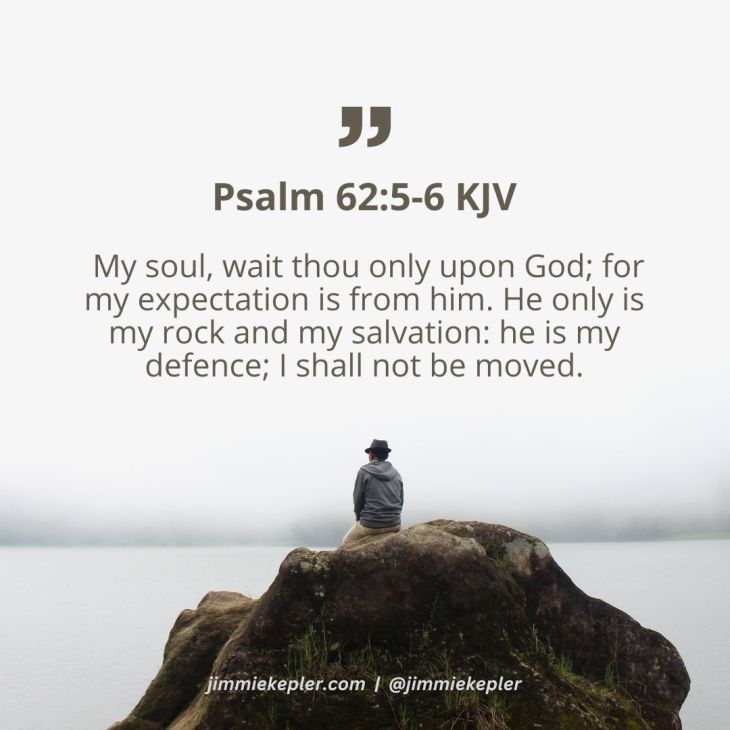
Psalm 62:5-6 KJV – Who is My Rock?
My soul, wait thou only upon God; for my expectation is from him. He only is my rock and my salvation: he is my defence; I shall not be moved.
Psalm 42:5 KJV – Praise God For His Help
Why art thou cast down, O my soul? and why art thou disquieted in me? hope thou in God: for I shall yet praise him for the help of his countenance.
Man or woman’s ultimate hope comes from knowing Jesus Christ as Lord and Savior.
Do you know Jesus Christ as your Savior and Lord? If you died tonight, would you go to heaven?
Here’s how can know Jesus Christ as your Lord and Savior and be sure heaven is your eternal home. Click the link to read my personal story of accepting Jesus – Jimmie’s Story.
Disclosure: I am an Amazon affiliate. If you purchase using the links in the article I receive a small commission.
Do you know Jesus Christ as your Savior and Lord? If you died tonight, would you go to heaven?
Here’s how can know Jesus Christ as your Lord and Savior and be sure heaven is your eternal home. Click the link to read my personal story of accepting Jesus – Jimmie’s Story.