In chapter eight, “The Settlers”, Spender returns to the rest of the expedition. He carries a gun and shoots six of his crew-mates, saying he is the last Martian. Captain Wilder approaches under a white flag and has a short discussion with Spender during which the archaeologist explains that if he manages to kill off the expedition it may delay human colonization of the planet for a few more years, possibly long enough that the expected nuclear war on Earth will protect Mars from human colonization completely.
Although he opposes Spender’s methods, Captain Wilder somewhat agrees with his attitude towards colonization and wishes for him a humane death. He returns to the others and joins them as they pursue Spender, and Wilder shoots Spender in the chest during the fight before he can be killed by anyone else. The captain later knocks out the teeth of Parkhill, another expedition member, when he disrespectfully damages some Martian glass structures while “target practicing.”
Many of the characters of the Fourth Expedition — Parkhill, Captain Wilder, and Hathaway — re-appear in later stories.
“The Settlers” is the first story that displays a central theme of The Martian Chronicles. It acts as a commentary on the Western frontier of the United States and its colonization, using the colonization of Mars as the analogy.
Like Spender, Bradbury’s message is that some types of colonization are right, and others are wrong. Trying to recreate Earth is viewed as wrong, but an approach that respects the fallen civilization that is being replaced is right.
In the before mentioned version, this short story describes the first settlers coming to Mars, the Lonely Ones, the ones that came to start over on the planet. It first appeared in The Martian Chronicles.
A 1997 edition of the book advances all the dates by 31 years. “The Settlers” date advances from 2001 to 2032.
“And the Moon Be Still as Bright” was first published in Thrilling Wonder Stories, June 1948.
The next chapter opens with the men of the Fourth Expedition gathering firewood against the cold Martian evening. The scientists have found that all the Martians have died of chickenpox (brought by one of the first three expeditions) — analogous to the devastation of Native American populations by smallpox.
The men, except for the archaeologist Spender and Captain Wilder, become more boisterous. Spender loses his temper when one of his crew-mates starts dropping empty wine bottles into a clear blue canal. He knocks him into the canal. When questioned by his captain, Spender replies “We’ll rip it up, rip the skin off, and change it to fit ourselves…We Earth Men have a talent for ruining big, beautiful things,” referring to Earth. He leaves the rest of the landing party to explore Martian ruins.
Note that, in some editions of the collection, the two stories about Jeff Spender have been combined as one.The two collections are chapters seven and eight.
A 1997 edition of the book advances all the dates by 31 years. This story is advanced from 2001 to 2032.
The Third Expedition was first published as “Mars is Heaven!” in Planet Stories, Fall 1948.
The arrival and demise of the third group of Americans to land on Mars is described by this story. This time the Martians are prepared for the Earthlings. When the crew arrives, they see a typical town of the 1920s filled with the long-lost loved ones of the astronauts.
Captain John Black tells his crew to stay in the rocket. The crew are so happy to see their dead family members that they ignore their captain’s orders and join their supposed family members. The Martians use the memories of the astronauts to lure them into their “old” houses where they are killed in the middle of the night by the Martians themselves. The next morning, sixteen coffins exit sixteen houses and are buried.
The original short story was set in the 1960s and dealt with characters nostalgic for their childhoods in the Midwestern United States in the 1920s. In the Chronicles version, which takes place forty years later but which still relies upon 1920s nostalgia, the story has a brief paragraph about medical treatments that slow the aging process, so that the characters can be traveling to Mars in the 2000s but still remember the 1920s.
A 1997 edition of the book advances all the dates by 31 years. This story is advanced from 2000 to 2031.
Chapter five, The Taxpayer, first appeared in The Martian Chronicles.
A man insists that he has a right to be let onto the next rocket to Mars, because he is a taxpayer. He insists on being let on the ship so strongly because the Earth will be having a great atomic war soon, and no one wants to be around when it happens. He is not allowed on the ship and eventually gets taken away by the police.
A 1997 edition of the book advances all the dates by 31 years. This story is advanced from 2000 to 2031.
I love reading and writing short stories. A few years ago I came up with the idea of writing a nonfiction article on the five most influential pre-1950 computers in science fiction. In researching that list of potential computers, I read a number of books and short stories. E.M. Forster’s “The Machine Stops” topped off the list. It left me speechless and amazed. I wrote a review about that story last week. You can find it HERE. A second short story on the list was Misfit by Robert A. Heinlein. You can find it HERE. The third computer I found was “The Engine.” The Engine is a fictional device described in Gulliver’s Travels by Jonathan Swift in 1726. You can find it HERE.
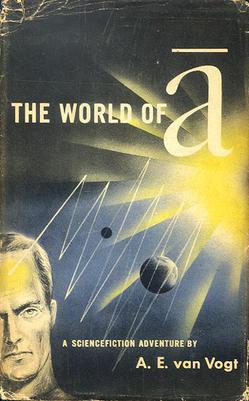
The World of Null-A, sometimes written The World of Ā, is a 1948 science fiction novel by A. E. van Vogt. Originally published as a three-part serial in Astounding Stories, it incorporates concepts from the General Semantics of Alfred Korzybski. The name Ā refers to non-Aristotelian logic.
Gilbert Gosseyn, a man living in an apparent utopia where those with superior understanding and mental control rule the rest of humanity, wants to be tested by the giant Machine that determines such superiority. However, he finds that his memories are false. In his search for his real identity, he discovers that he has extra bodies that are activated when he dies (so that, in a sense, he cannot be killed), that a galactic society of humans exists outside the Solar system, a large interstellar empire wishes to conquer both the Earth and Venus (inhabited by masters of non-Aristotelian logic), and he has extra brain matter that, when properly trained, can allow him to move matter with his mind.
The World of Null-A appeared originally as a 1945 serial in the magazine Astounding Science Fiction, which was edited by John W. Campbell, Jr. Van Vogt revised and shortened the tale for the 1948 novel release by Simon and Schuster. In 1970, van Vogt revised it yet again (though only slightly this time), and added an Author’s Introduction in which he both defended the controversial work, and admitted that the original serial had been flawed.
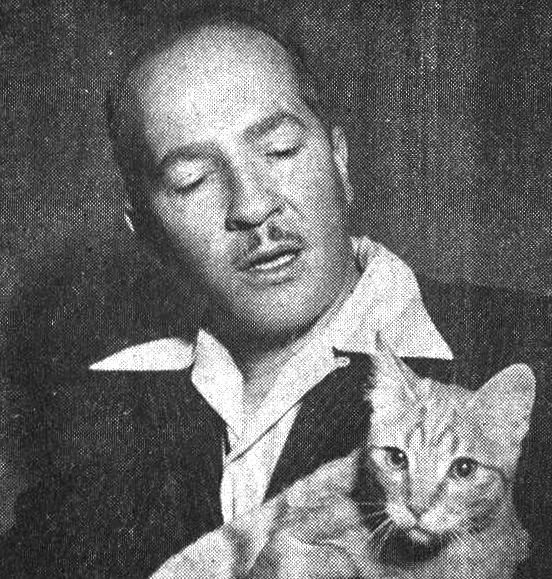
Photo of Robert A. Heinlein from Imagination, 1953 (scan of original magazine), digitally enhanced, CC0, via Wikimedia Commons
I love reading and writing short stories. A few years ago I came up with the idea of writing a nonfiction article on the five most influential pre-1950 computers in science fiction. In researching that list of potential computers, I read a number of books and short stories. E.M. Forster’s “The Machine Stops” topped off the list. It left me speechless and amazed. I wrote a review about that story last week. You can find it HERE.
The second short story on the list is “Misfit” by Robert A. Heinlein. In the weeks ahead I will share some of the science fiction gems I unearthed or rediscovered.
“Misfit” is a science fiction short story by Robert A. Heinlein. It was originally titled Cosmic Construction Corps before being renamed by the editor John W. Campbell. The November 1939 issue of “Astounding Science Fiction” first published the story. One of the earliest of his Future History stories, it was later included in the collections Revolt in 2100 and The Past Through Tomorrow.
The story concerns Andrew Jackson Libby (here nicknamed Pinky, for his red hair, but later nicknamed Slipstick), a boy from Earth with extraordinary mathematical ability but meager education. He found few opportunities on Earth. He joins the Cosmic Construction Corps, a future military-led version of the Civilian Conservation Corps (remember it from President Franklin Delano Roosevelt’s New Deal?) employing out-of-work youth to colonize the Solar System. With a group of other inexperienced young men, he is assigned to a ship traveling to the asteroid belt where their task is to move an asteroid into a more convenient orbit between Mars and Earth.
Pinky comes to the Captain’s attention during the process of blasting holes in the asteroid for rocket engines. Pinky realizes that a mistake has been made in calculating the size of the charge, preventing a catastrophic blast.
He is assigned to the ship’s astrogation computer. During the trip back to Earth, the computer malfunctions and Libby take over, performing all the complex calculations in his head. The asteroid is settled successfully into its final orbit.
“Slipstick” Libby became one of Heinlein’s recurring characters, and would later appear in several works associated with Lazarus Long, among them Methuselah’s Children and The Cat Who Walks Through Walls.
The short story includes one of the first examples of the phrase “space marine”.
I compiled the list. The criteria are authors of science fiction or any sub-genre.
I find that the best science-fiction writers are among some of the most creative writers ever. These authors made my list. I have read the people I have listed. Most will disagree, but these are my favorites.
1. Ray Douglas Bradbury (August 22, 1920 – June 5, 2012) was an American fantasy, science fiction, horror and mystery fiction author. Best known for his dystopian novel Fahrenheit 451 (1953) and the science fiction and horror stories gathered together as The Martian Chronicles (1950) and The Illustrated Man (1951). Bradbury was one of the most celebrated 20th-century American writers. He wrote and consulted on many screenplays and television scripts. These include Moby Dick, and It Came from Outer Space. Many of his works were made into comic books, television shows, and films.
2. Isaac Asimov (born Isaak Yudovich Ozimov; circa January 2, 1920 – April 6, 1992) was an American author and professor of biochemistry at Boston University, best known for his works of science fiction and for his popular science books. Asimov was prolific and wrote or edited more than 500 books and an estimated 90,000 letters and postcards. His books have been published in 9 of the 10 major categories of the Dewey Decimal Classification.
Asimov is widely considered a master of hard science fiction and, along with Robert A. Heinlein and Arthur C. Clarke; he was regarded as one of the “Big Three” science fiction writers during his lifetime. Asimov’s most famous work is the Foundation Series; his other major series are the Galactic Empire series and the Robot series. The Galactic Empire novels are explicitly set in earlier history of the same fictional universe as the Foundation Series. Later, beginning with Foundation’s Edge, he linked this distant future to the Robot and Spacer stories, creating a unified “future history” for his stories much like those pioneered by Robert A. Heinlein and before produced by Cordwainer Smith and Poul Anderson. He wrote hundreds of short stories, including the social science fiction “Nightfall”, which in 1964 was voted by the Science Fiction Writers of America the best short science fiction story of all time. Asimov wrote the Lucky Starr series of juvenile science-fiction novels using the pen name Paul French.
Asimov also wrote mysteries and fantasy, as well as much nonfiction. Most of his popular science books explain scientific concepts in a historical way, going as far back as possible to a time when the science in question was at its simplest stage. He often provides nationalities, birth dates, and death dates for the scientists he mentions, as well as etymologies and pronunciation guides for technical terms. Examples include Guide to Science, the three-volume set Understanding Physics, and Asimov’s Chronology of Science and Discovery, as well as works on astronomy, mathematics, history, William Shakespeare’s writing, and chemistry.
3. Sir Arthur Charles Clarke, CBE, FRAS (Sri Lankabhimanya Arthur Charles Clarke) (16 December 1917 – 19 March 2008) was a British science fiction writer, science writer and futurist, inventor, undersea explorer, and television series host.
He is perhaps most famous for being co-writer of the screenplay for the movie 2001: A Space Odyssey, widely considered to be one of the most influential films of all time. His other science fiction writings earned him a number of Hugo and Nebula awards, along with a broad readership, making him into one of the towering figures of the field. For many years, he, Robert Heinlein, and Isaac Asimov were known as the “Big Three” of science fiction.
Clarke was a lifelong proponent of space travel. In 1934, while still a teenager, he joined the British Interplanetary Society. In 1945, he proposed a satellite communication system — an idea that, in 1963, won him the Franklin Institute’s Stuart Ballantine Medal and other honors. Later he was the chairman of the British Interplanetary Society from 1946–47 and again in 1951–53.
Clarke was a science writer, who was both an avid populariser of space travel and a futurist of uncanny ability, and wrote over a dozen books and many essays (which appeared in various popular magazines) on these subjects. In 1961, he was awarded a Kalinga Prize, an award given by UNESCO for popularizing science. These along with his science fiction writings, eventually earned him the moniker “Prophet of the Space Age”.
4. Robert Anson Heinlein (July 7, 1907 – May 8, 1988) was an American science fiction writer. Often called the “dean of science fiction writers,” he was one of the most influential and controversial authors of the genre in his time. He set a standard for scientific and engineering plausibility, and helped to raise the genre’s standards of literary quality.
He was one of the first science fiction writers to break into mainstream magazines such as The Saturday Evening Post in the late 1940s. He was one of the best-selling science fiction novelists for many decades, and he, Isaac Asimov, and Arthur C. Clarke are often considered to be the “Big Three” of science fiction authors.
A notable writer of science fiction short stories, Heinlein was one of a group of writers who came to prominence under the editorship of John W. Campbell, Jr. in his Astounding Science Fiction magazine—though Heinlein denied that Campbell influenced his writing to any great degree.
Within the framework of his science fiction stories, Heinlein repeatedly addressed certain social themes: the importance of personal liberty and self-reliance, the obligation people owe to their societies, the influence of organized religion on culture and government, and the tendency of society to repress nonconformist thought. He also speculated on the influence of space travel on human cultural practices.
Heinlein was named the first Science Fiction Writers Grand Master in 1974. He won Hugo Awards for four of his novels; in addition, fifty years after publication, three of his works were awarded “Retro Hugos”—awards given retrospectively for works that were published before the Hugo Awards came into existence. In his fiction, Heinlein coined terms that have become part of the English language, including “grok” and “waldo”, and speculative fiction, as well as popularizing the terms like “TANSTAAFL”, “pay it forward”, and space marine. He also described a modern version of a waterbed in his novel The Door Into Summer, though he never patented or built one. Several of Heinlein’s works have been adapted for film and television. In Chapter 3 of the novel “Podkayne of Mars” he anticipated the cell phone, 20 years before the technology was invented by Motorola.
5. Orson Scott Card (born August 24, 1951) is an American novelist, critic, public speaker, essayist and columnist. He writes in several genres but is known best for science fiction. His novel Ender’s Game (1985) and its sequel Speaker for the Dead (1986) both won Hugo and Nebula Awards, making Card the only author to win both science fiction’s top U.S. prizes in consecutive years. A feature film adaptation of Ender’s Game, which Card co-produced, was released in late October 2013 in Europe and on November 1, 2013, in North America.
Card is a professor of English at Southern Virginia University, has written two books on the subject of creative writing, hosts writing bootcamps and workshops, and serves as a judge in the Writers of the Future contest. A great-great-grandson of Brigham Young, Card is a practicing member of The Church of Jesus Christ of Latter-day Saints (LDS Church). In addition to producing a large body of fiction works, he has also offered political, religious, and social commentary in his columns and other writing.
6. Franklin Patrick Herbert, Jr. (October 8, 1920 – February 11, 1986) was an American science fiction writer best known for the novel Dune and its five sequels. Though he became famous for science fiction, he was also a newspaper journalist, photographer, short story writer, book reviewer, ecological consultant and lecturer.
The Dune saga, set in the distant future and taking place over millennia, deals with complex themes such as human survival and evolution, ecology, and the intersection of religion, politics and power. Dune itself is the “best-selling science fiction novel of all time” and the series is widely considered to be among the classics of the genre.
The photo is Frank Hebert, Jr. I met him at a conference in the late 1970s where he was a speaker.
The Martian Chronicles is a 1950 science fiction short story collection by Ray Bradbury that chronicles the colonization of Mars by humans fleeing from a troubled and eventually atomically devastated Earth, and the conflict between aboriginal Martians and the new colonists. The book lies somewhere between a short story collection and an episodic novel, containing stories Bradbury originally published in the late 1940s in science fiction magazines. For publication, the stories were loosely woven together with a series of short, interstitial vignettes.
Bradbury has credited Sherwood Anderson’s Winesburg, Ohio and John Steinbeck’s The Grapes of Wrath as influences on the structure of the book. He has called it a “half-cousin to a novel” and “a book of stories pretending to be a novel”. As such, it is similar in structure to Bradbury’s short story collection, The Illustrated Man, which also uses a thin frame story to link various unrelated short stories.
The first third (set in the period from January 1999—April 2000) details the attempts of the Earthmen to reach Mars, and the various ways in which the Martians keep them from returning. In the crucial story, “—And the Moon be Still as Bright”, it is revealed by the fourth exploratory expedition that the Martians have all but perished in a plague caused by germs brought by one of the previous expeditions. This unexpected development sets the stage for the second act (December 2001—November 2005), in which humans from Earth colonize the deserted planet, occasionally having contact with the few surviving Martians, but for the most part preoccupied with making Mars a second Earth. However, as war on Earth threatens, most of the settlers pack up and return home. A global nuclear war ensues, cutting off contact between Mars and Earth. The third act (December 2005—October 2026) deals with the aftermath of the war, and concludes with the prospect of the few surviving humans becoming the new Martians, a prospect already foreshadowed in “—And the Moon be Still as Bright”, and which allows the book to return to its beginning.
A 1997 edition of the book advances all the dates by 31 years (thus running from 2030 to 2057), includes “The Fire Balloons”, and replaces “Way in the Middle of the Air” (a story less topical in 1997 than in 1950) with the 1952 short story “The Wilderness”, dated May 2034 (equivalent to May 2003 in the earlier chronology).
Next week I’ll begin doing a summary for all 31 of the short stories in the book summarizing one each Monday.
Usher II (April 2005/2036) first published as Carnival of Madness in Thrilling Wonder Stories, April 1950. “Usher II” tells of Bradbury’s and other writers’ fear of censorship.
A literary expert named William Stendahl retreats to Mars and builds his image of the perfect haunted mansion, complete with mechanical creatures, creepy soundtracks and the application of many tons of poison to kill every living thing in the surrounding area. He is assisted by Pikes, a film aficionado and former actor whose collection was confiscated and destroyed by the government and was subsequently banned from performing. When the Moral Climate Monitors come to visit, Stendahl and Pikes arrange to kill each of them in a manner reminiscent of a different horror masterpiece, culminating in the murder of Inspector Garrett in a sequence reminiscent of Edgar Allan Poe’s “The Cask of Amontillado”. When Stendahl’s persecutors are dead, the house sinks into the lake as in Poe’s short story, “The Fall of the House of Usher”.
Bradbury hints at past events on Earth, set in 1975 – 30 years prior to the events in “Usher II.” A government-sponsored ‘Great Burning’ of books is described, followed by the emergence of an underground society of citizens possessing small hoardings of books, the ownership of which had been declared illegal. Those found to possess books had them seized and burned by fire crews. Mars apparently emerged as a refuge from the fascist censorship laws of Earth, until the arrival of a government organization referred to only as “Moral Climates” and their enforcement divisions, the “Dismantlers” and “Burning Crew”. Bradbury would reuse the concept of massive government censorship (to the point of abolishing all literature) in his book Fahrenheit 451.
In 2010 Los Angeles artist Allois, in collaboration with Bradbury, released an illustrated copy of Usher and Usher 2 double feature.
The Naming of Names (2004-05/2035-36) first appeared in The Martian Chronicles. Not to be confused with the short story “The Naming of Names”, first published in Thrilling Wonder Stories, August 1949, later published as “Dark They Were, and Golden-eyed”.
This story is about later waves of immigrants to Mars, and how the geography of Mars is now largely named after the people from the first four expeditions (e.g., Spender Hill, Driscoll Forest) than after physical descriptions of the terrain

 In chapter eight, “The Settlers”, Spender returns to the rest of the expedition. He carries a gun and shoots six of his crew-mates, saying he is the last Martian. Captain Wilder approaches under a white flag and has a short discussion with Spender during which the archaeologist explains that if he manages to kill off the expedition it may delay human colonization of the planet for a few more years, possibly long enough that the expected nuclear war on Earth will protect Mars from human colonization completely.