The Martian Chronicles – Chapter Seventeen

the-martian-chroniclesWay in the Middle of the Air (June 2003/2034) It first appeared in Other Worlds, July 1950.

In an unnamed Southern town, a group of white men learn that all African-Americans are planning to emigrate to Mars. Samuel Teece is an obviously racist white man who loudly decries their departure as he watches a great mass of humanity passing his shop porch. He tries to stop several black men from leaving. One man is harassed because of an old, unneeded debt — other black passers-by give money to relieve the debt. Teece then tries to keep a younger black man (named “Silly”) from leaving, claiming that his work contract (signed with an “X” on a contract, as it is implied that Silly could not read or write) forbids his departure from Teece’s business. After an argument and a threat to lock him in a shed, some of Teece’s white companions stand up to Teece and force him to let Silly leave with his family.

As he drives off, Silly yells to Teece, “what will you do nights now, Mr. Teece?” Teece realizes that Silly is referring to his nocturnal visits to black homes, destroying houses, and lynching black men. Enraged at Silly’s comment, Teece and his father set off to get him. After giving chase in a car, the road becomes impassable, blocked by the discarded belongings of all the departing African-Americans. Teece and his father walk back to the shop, after which the rockets for Mars lift off. Teece, saying that he will be “damned” if he looks at the rockets, sits back in the quiet afternoon, and wonders what he really “will do nights.”

This episode is a poignant depiction of racial prejudice in America. However, it was eliminated from the 2006 William Morrow/Harper Collins, and the 2001 DoubleDay Science Fiction reprinting of The Martian Chronicles.

The Martian Chronicles – Chapter Sixteen

The Wilderness (May 2003/2034) It first appeared in The Magazine of Fantasy and Science Fiction, November 1952.

Two women, Janice Smith and Leonora Holmes, prepare to leave on a rocket to Mars, to find husbands or lovers waiting for them there. Janice muses on the terrors of space, drinks in last memories of the Earth she will soon be leaving, and compares her situation to that of the pioneer women of the 19th century American frontier.

This story only appears in the 1974 ion of The Martian Chronicles by The Heritage Press, the 1979 Bantam Books illustrated trade ion, and the 1997 ion of The Martian Chronicles. In its original form, the story was dated 2003, and this date is consistent with the other stories. As it seems in the 1997 ion, the date (together with all the other dates) has been shifted ahead 31 years, to May 2034.

Colorado Christian Writers Conference and Write His Answer

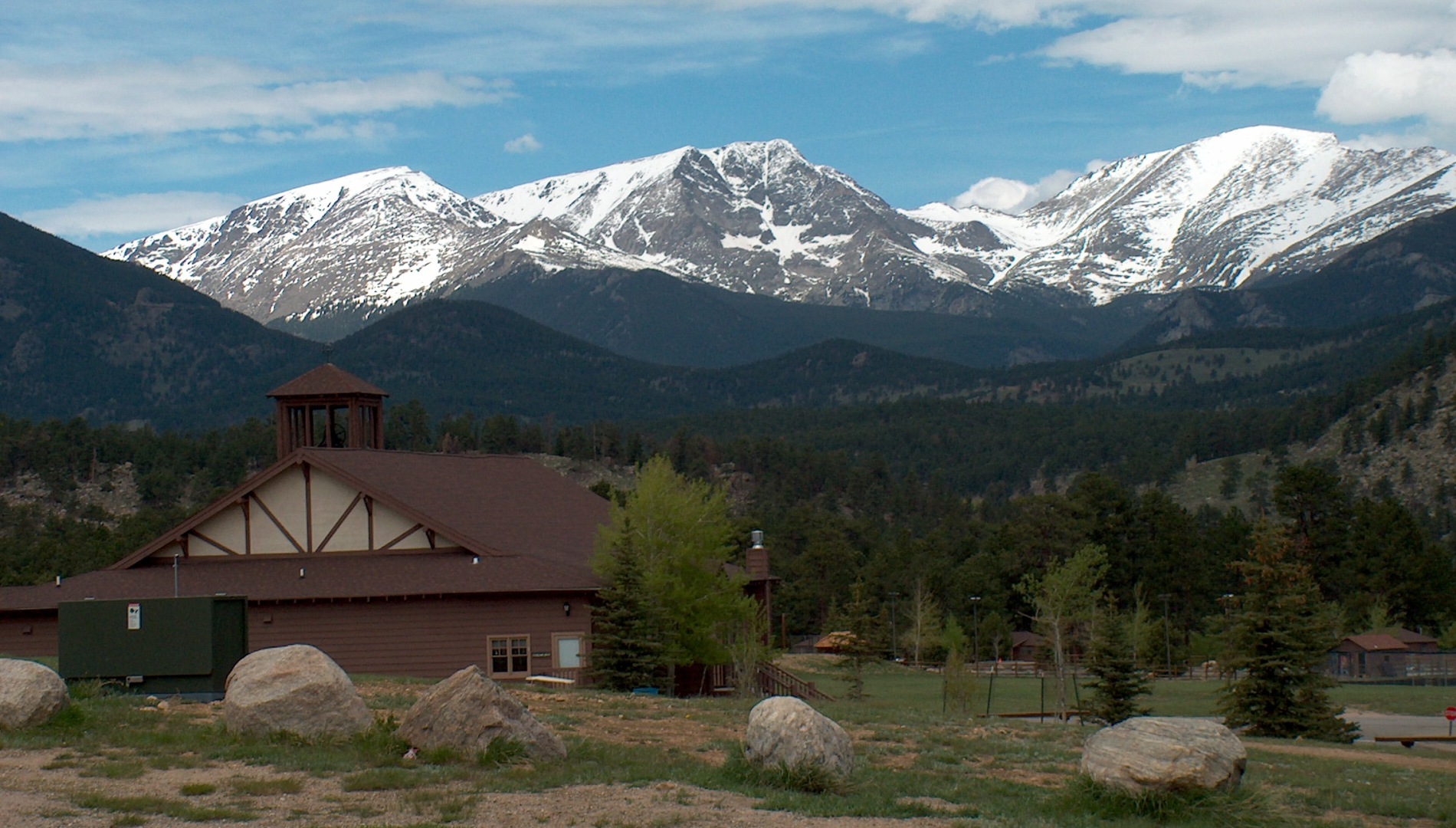
Estes Park ColoradoI remember finding “Write His Answer” in the bookstore at the Green Lake Conference Center in Wisconsin in the early 1990s. I was amazed. It spoke to my need as a writer. I had been freelancing about 10 years at the time.

Since then I have been through the book about once a year and given a copy to over 25 Christian writer friends. It continues to be an encouragement. My original edition is marked-up, torn and tattered as well as cherished. Marlene Bagnull is the author of “Write His Answer”. She also is the director of the Colorado Christian Writer’s Conference for over a decade.

I am excited about attending the Colorado Christian Writer’s Conference. It’s been on my bucket list for nearly a decade. If you’ve been thinking of attending, this is the year to come. It will be an amazing investment in your writing ministry.

Here is an article with 7 Reasons Why You Need To Come To The Colorado Christian Writer’s Conference.

http://writehisanswer.wordpress.com/2013/05/02/7-reasons-why-you-need-to-come-to-the-colorado-christian-writers-conference/

Short Story: Prairie Dogs’ Helmets

I was notified this week my 5900 word short story “Prairie Dogs’ Helmets” received final acceptance from “Bewildering Stories”. It is on their publication schedule.

I Am a Writer

I belong to the Dallas Writing Practice Group. A recent assignment was to write why “I am a writer”. Here’s what I wrote …

I’m a writer because I enjoy writing.

I get my ideas from the world around me as well as the fantasies within me.

I try to write for a regular period each day.

I believe in using adjectives and adverbs frugally.

I structure my work-in-progress by writing according to how the story seems to be telling itself instead of writing to a prepared plot outline though I know my major plot points.

I realize writing self-discipline by making myself work whether I’m in the mood or not.

I handle the difficult, ‘writer’s block’ or ‘dry’ times by working on something else to keep good writing habits.

I attempt to make my work as good as it can be by editing, rewriting and polishing.

In seeking an agent or publisher I research the market thoroughly and learn how to make a professional submission. I also read books by writer’s the potential agent represent or by the publisher where I believe I’m a good fit.

I receive rejection slips with a twinge, and then move to the next submission. It’s not personal.

I see myself in the future finding satisfaction in writing novels and narrative nonfiction my readers enjoy.

I want to write because I have characters and stories bursting to come to life. I have voices in my head that need to escape to paper or keyboard.

If you a writer how would you explain why you are a writer?

Writing Podcasts I Listen To

Some pretty good writing podcasts that I listen to regularly are:

ISBW_logoI Should Be Writing.

It is found at http://murverse.com/. Mur Lafferty does the podcast. I have listened to her since 2005. She was a 2012 Nominee for the John W. Campbell Award for Best New Writer.

Mur Lafferty is an author, podcaster, and editor. She lives in Durham, NC, with her husband and 10-year-old daughter.

Podcasts: She has been podcasting since 2004 when she started her essay-focused show, Geek Fu Action Grip. Then she started the award-winning I Should Be Writing in 2005, which is still going today. In 2010 she took over as the editor of Escape Pod, and she also runs the Angry Robot Books podcast.

Books: Starting with podcast-only titles, Mur has written several books and novellas. Her first professionally published book, The Shambling Guide to New York City, will be out in May, 2013. She writes urban fantasy, superhero satire, afterlife mythology, and Christmas stories.

Nonfiction: Mur has written for several magazines including Knights of the Dinner Table, Anime Insider, and The Escapist.

Mur is studying for her MFA in Popular Fiction at the Stonecoast program at the University of Southern Maine.

Source: http://murverse.com/sample-page/

scifi

Adventures in SciFi Publishing.

It is found at: http://www.adventuresinscifipublishing.com/. I have listened to it since 2007.

Adventures in SciFi Publishing brings you podcast and text interviews with authors, editors, publishers, and agents of science fiction and fantasy as well as reviews, news, coverage of live events, videos, and other treats. Winner of the 2008 Best Writing-Related Parsec Award. 2011 Parsec Award Finalist.

Source: https://www.facebook.com/pages/Adventures-in-Scifi-Publishing/144698272222074?id=144698272222074&sk=info

Albedo One and Albedo 2.0

AlbedoAlbedo One & Albedo 2.0 – Submission Guidelines for Authors

We are always looking for thoughtful, well written fiction. Our definition of what constitutes science fiction, horror and fantasy is extremely broad and we love to see material which pushes at the boundaries or crosses between genres.

All authors receive a complimentary print and pdf copy of the issue their story appears in. Our payment is 6 euro per 1000 words (i.e. 0.6 cents per word), up to 8000 words. We hope to improve our rates gradually in the future, and purchasing the magazine is the way to help us achieve that!

Our preferred length is between 2,500 and 8,000 words. We have published stories above that limit, but only because we thought that they were of exceptional quality. Please also note that we cannot (regretfully) pay for additional words beyond 8000.

Our response time is variable – but we aim to respond between two to four months after submission date.

We do not accept simultaneous or multiple submissions, nor do we accept previously published stories, the exception being stories that have been published previously in languages other than English (i.e. you may submit stories that have not yet been published in English, but the stories must be translated to English for submission).

We do not count stories that have been posted online in fiction workshops for critique and improvement as having been previously published (i.e. these may also be submitted, but must be removed from the workshop if accepted for publication).

All stories submitted will be considered for publication in either Albedo One magazine, OR in the online Albedo 2.0 Fiction Showcase series, which aims to publish and showcase online the very best fiction that the Albedo One team can lay their hands on.

For postal submissions: All stories should be typewritten, on A4 paper or US equivalent, double line or 1.5 line spaced, using one side of the paper and leaving at least 1″ margins all round. Electronic version should be available on request.

We do NOT return manuscripts, so disposable manuscripts ONLY please!

Our postal submissions address:

Albedo One
2 Post Road
Lusk
Co. Dublin
Ireland

All submissions must be accompanied by an e-mail address, our preferred method of response, or a SAE with Irish stamps. NO English stamps, NO American stamps please – the Irish Post Office does NOT accept these. International Reply Coupons (IRCs) are unfortunately also not accepted by the Irish Post Office.

For email submissions: Mail your e-mail submission to: bobn@yellowbrickroad.ie.

Email submissions may be pasted into the body of your email, or may be submitted as an attachment in .rtf format (no .docx please).

Please enter subject line as follows: Fiction Submission: Name of Story

We strongly suggest that potential contributors be familiar with the style and content of Albedo One before submitting, and we advise ordering a copy or minimally reading a low-cost pdf copy before submitting stories.

Story rights: Upon acceptance of a story for publication in Albedo One magazine or the Albedo 2.0 Fiction Showcase, we claim First World English Rights for Online and Print mediums. This lets us be the ones to publish your story first, worldwide in the English language, either in the pages of Albedo One, or online on the Albedo 2.0 Fiction Showcase. As soon as we have published your story, be it in Albedo One magazine or Albedo 2.0, rights revert to the authors. Albedo One NEVER claims any permanent rights to your work.

You might also wish to consider entering our respected horror, fantasy and science fiction writing competition, the International Aeon Award Short Fiction Contest, with a grand prize of €1000 euro (yes, that’s right, €1000!) and publication in Albedo One.

We are also looking for interviews with high profile authors, media personalities and for book reviews.

Albedo One – Guidelines to Artists

Please submit a sample of your work. We currently require cover artwork only. Artwork may be commissioned on the basis of your initial sample submission. We pay €20 for artwork, on publication.

Our address:

Albedo One
2 Post Road
Lusk
Co. Dublin
Ireland

Aeon Press – Guidelines for Authors

AEON PRESS IS CURRENTLY CLOSED TO SUBMISSIONS.

Source: http://www.albedo1.com/?page_id=82

My Writer’s Group

Our writing group! Minus a couple of key members.

One way a writer can improve his odds of traditional publication is having an established writer as a mentor. Writing groups can also encourage and mentor. Let me share an example of the influence a mentor.

In 1919 a young veteran returned from World War I. He moved to Chicago moving into a certain neighborhood for the purpose of being close to the author Sherwood Anderson.

The young beginning writer liked the critical praise for Anderson and his book Winesburg, Ohio. He had heard that Sherwood Anderson was willing to help aspiring writers. He worked to met Anderson. The two men became close friends. They met almost every day to read newspapers, magazines, and novels. They dissected the writings they read.

The aspiring writer brought his own works for critique having Anderson help him improve his craft. Anderson went as far as introducing the want-to-be writer to his network of publishing contacts. The aspiring writer did okay with his first book The Sun Also Rises. The aspiring writer was Ernest Hemingway.

Sherwood Anderson didn’t stop there. He moved to New Orleans where he met another aspiring writer. He took the young man through the same steps and paces of the craft. They shared an apartment. He even invested $300 in getting this writer’s first book Soldier’s Pay published. This young author was William Faulkner. Faulkner’s teacher was the encouragement of learning from how others crafted their work.

Anderson would later move to California and repeat the process with John Steinbeck. Thomas Wolfe and Erskine Caldwell were also mentored by Sherwood Anderson. Ray Bradbury says Winesburg, Ohio was on his mind when he wrote The Martin Chronicles. He basically wrote Winesburg, Ohio placing it on the planet Mars.

Only Mark Twain has had a greater influence in shaping modern American writing than Sherwood Anderson. Anderson didn’t do too badly, did he? William Faulkner, Ernest Hemingway and John Steinbeck each won the Nobel Prize for Literature and there are multiple Pulitzer Prizes between them.

If you are serious about writing find a mentor or join a writing group. My writer’s group and critique group keep me motivated. My writer’s group and group’s member are the best thing that happened to me in 2012.

Short Story: The Devil Was in the Martian Fog

The devil was in the Martian fog that night. He could feel his presence with every gust of wind and slimy, granular droplet of moisture against his face. He could hear him in the oscillating tones as the outpost’s time tower signaled the midnight hour. He could see him as the corner traffic control strobes blinked their warning. He could sense him in the snarling sounds of the Giant Martian Red Armadillos making their nocturnal rounds for refuse control eating the contents of the dumpsters behind the station’s mess hall.

It was a bad night for riding the heated, moving sidewalk across the station’s parade grounds, but he had sworn to himself when he set out on his mission that nothing could make him not complete his hourly rounds. He needed this job to offset his meager early retirement pension from when the rocket factory shut down and they moved the jobs off planet to one of Saturn’s moons.

As he rode the moving sidewalk the sticky goo from the fog was becoming so slimy on him that he longed to get back to the guard shack, shower, and get into a fresh uniform. The temperature continued to drop. His breath’s condensation mixed with the slimy fog and freezing in his mustache and beard. No other night watchman, he thought, dared to brave making his rounds in this weather.  The slimy goo would drive them insane, as it made them feel both suffocated and entombed.  It had happened before to coworkers, but he had learned to tolerate the grainy ooze.

The other two night watchmen on duty huddled around the coffee pot back in the guard shack. They were telling each other lies about what they did in the inter-planetary wars, the evils of multi-universe corporate buyouts and forced retirements and exiles, and what they did with certain Earthling widow women who had retired to Mars to help them not be so lonesome.

In the distance the sound of the of 12:05 AM rocket blasting off to the Martian moon Phobos could be heard. The groans of the tug boats floating out on the hydrargyrum-filled Martian Canals filled the air as they fought their way upstream, against the quicksilver, pushing their barges northward.  The noise became clearer, louder, as he worked his way from the government monitoring station down to the canal front.

As he turned the corner on Jupiter Avenue, he could see two shadowy figures struggling. They were at the door to the Space Traveler’s Relief Center.  Thanks to the light orb over the open door, he could tell this was a life or death struggle. Dang-it, he thought, looks like two drunks trying to kill each other.  I had better go get the Planet Police. Somebody is going to kill someone.  Yet, he stopped.  He was looking, staring.  The devil was looking, too.

Boom! Suddenly, from the Martian Canal was a thunderous explosion.  A ball of fire shot up into the sky.  Burning cylinders of lava spewed from the barge like a giant July 4th fireworks display.  Some went straight up in the night sky.  Some shot up canal from the ship.  My god, one went straight into the pilot’s window on the tug completely obliterating the superstructure. Oh no! One was rocketing straight toward him.

The two drunken men stopped fighting. They yelled inside the Space Traveler’s Relief Center for help. They ran to the corner where the flaming debris hit the man.  The light orb followed them illuminating their each step and bathing them in warmth.

The smell of burning flesh filled the air. The upper body was at least ten feet from his legs. His grayish-purple and pink intestines spread over the distance in-between. His bright red wool night watchman uniform was smoldering.

Moving over to the body, the first drunk stopped. His eyes got wide and fiery. He grew sick to his stomach.  He threw up. He quickly wiped his mouth with his right shirtsleeve. “It cut him in two and almost cooked him at the same time.”

“Dang-it DraYack, any fool can see that.” The second drunk then reached for a silver flask exposed from the rear pocket of the deceased. “Who, who is he?”

The tall, slender Overseer from the Space Traveler’s Relief Center ran outside and down to the corner in answer to the men’s cries and the noise of the explosion. He didn’t see the second drunk grab the silver flask and put it inside his shirt. He heard and answered the second drunk’s question. “Why that’s the night watchman.”

Ka-boom! “Hit the dirt!” someone yelled.  Everyone dropped to the ground.  The Overseer’s helmet went flying as he dove for cover behind the dead man’s body.  Another massive explosion rocked the faltering vessel.

The tugboat was sinking into the depths of the canal fast. There were no more explosions, only flames. “What in the devil was it hauling to explode like that?” asked the Overseer.

They all moved back over and stared down at the red clad corpse. The first drunk broke the silence. “Hey Overseer, I thought someone was shelling us for a minute.” He paused looking around, glancing at the shiny silver of the Canal.

The Overseer was shaking his head right and left in a sort of disbelief kind of way. “Guess the deities have a sense of humor. They didn’t protect this man who had survived the Venetian Wars and his sentence working at the rocket factory. Instead they allow lava cylinders to kill and leave this being’s blood on the streets.”

The few blood curdling cries and screams from the injured in the Martian Canal started reaching their ears. The screams hadn’t lasted long.  The miniature canal gators quickly had entered the canal. They had a feeding frenzy on the injured and dead. They just as quickly moved back to the far bank of the Martian Canal to nap after their meal.

The Overseer was chanting some ritualistic death mantra over the night watchman’s body. He stopped chanting. He looked up saying, “Guess I had better go get the undertaker to take care of remains.”

A man dressed in black spoke up from the back of the gathering crowd. “No need. I’m already here.” It was the Digger Griffin, the undertaker.

All looked at the undertaker. The devil was looking too.  The devil was smiling.  The devil had been in the Martian fog and for the devil it had been a good night.

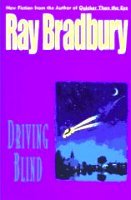
Driving Blind

This 1997 collection is uneven and at times weak. There is less fantasy or science fiction than in many of Ray Bradbury’s earlier works.

In the short story “Remember Me?” we find the theme of meeting a familiar face in a distant place.

The theme of children’s storytelling and kissing games is found in “House Divided”.

The theme of looking up an old flame is in “I Wonder What’s Become of Sally?”

And one of my favorite themes, the revenge of the nerd everybody picked on is the theme of “The Highest Branch on the Tree”.

The book has some terrific moments. Examples are when Bradbury recalls a tiny, dusty, moth-eaten Mexican circus, tells the hilarious story of Irish drinking buddies looking for a safe place in the bogs to take a woman, and yet another tale of perfect love squandered (“Madame et Monsieur Shill”).

If you’re new to Bradbury, this will do nicely, but for veteran readers it’s a bit of same old same old. I guess Bradbury needed another paycheck to allow this to be published. It is not bad, but this is not his best work.