The Martian Chronicles – Chapter Sixteen

The Wilderness (May 2003/2034) It first appeared in The Magazine of Fantasy and Science Fiction, November 1952.

Two women, Janice Smith and Leonora Holmes, prepare to leave on a rocket to Mars, to find husbands or lovers waiting for them there. Janice muses on the terrors of space, drinks in last memories of the Earth she will soon be leaving, and compares her situation to that of the pioneer women of the 19th century American frontier.

This story only appears in the 1974 ion of The Martian Chronicles by The Heritage Press, the 1979 Bantam Books illustrated trade ion, and the 1997 ion of The Martian Chronicles. In its original form, the story was dated 2003, and this date is consistent with the other stories. As it seems in the 1997 ion, the date (together with all the other dates) has been shifted ahead 31 years, to May 2034.

March 3, 2014

Something is Technically Wrong With Twitter

Today in History:

It is Monday March 3, 2014. It is the 62nd day of 2014. There are 303 days left in the year. On this date in 1837 US President Andrew Jackson & Congress recognizes Republic of Texas. On this date in 1863 the first US wartime military conscription (draft) bill enacted.

Twitter and the Oscars:

I think Oscar “killed” Twitter tonight (writing this on Sunday night while watching the Oscars). There were just too many re-Tweets (see picture) of Ellen’s selfie.

Come Monday:

I will be working from home Monday. Too much ice and sleet are frozen onto the roadways for me to risk driving into work.

Book Review: Zen in the Art of Writing

Zen in the Art of Writing by Ray Bradbury is not a single volume on writing. Rather, it is a collection of essays written over his long career. Each of the essays has a real nugget of insight for the reader. Bradbury teaches us about writing. He tells us to write about what we love, and what we hate and to stay drunk on writing, because it saves us from the world of reality. The book’s title is a little misleading. While Bradbury makes some statements that sound like a “Zen Master”, that is the closest I could come to find anything “Zen” about the book. I find the title a “hip” title some marketer probably dreamed up.

Bradbury devotes a chapter on the mechanics of writing, the way he learned it. To achieve success as a writer according to Bradbury, one must write at least a thousand words a day. A thousand words a day minimum must continue until the process becomes automatic. It is only fascinating to get into the mind of one of the greatest science fiction writers on how the craft is done. This chapter alone is worth buying the book which is very economical. It is an excellent book for the beginning writer and very inspirational for the advanced writer.

I Love Rain

I love rain. Most people hate it. I love it. Why should I love rain? It’s not easy for people to understand, but I will try to explain.

Rain is a precious gift from God. It falls from the sky. Sometimes it falls in large amounts. Sometimes it comes from the sky in small amounts. Sometimes it doesn’t visit us for weeks or months at a time. When it does visit it always brings its friend the clouds. Rain can also bring its noisy friend thunder and an its illuminating friend lightning.

Rain is like a guest in your home. At first you’re glad to see the rain, but if it stays around too long, it can out stay its welcome.

Rain can be refreshing. It gives the air and the countryside a shower. It washes the pollen from the air. It washes the pollen off the cars, sidewalks, and driveways. Rain removes the dust from the leaves of the flowers, bushes and trees.

The temperature drops when the rains come. Rain transforms the hot world into a cool, air conditioned environment in the summer and a chilly one in the winter. It helps you appreciate a warm, dry house. It is a muse for Ray Bradbury as he writes short stories about it in “The Illustrated Man” in his short story “The Long Rain”.

Rain also helps a person forget their troubles. You worry less about how you look. After all, the water from the mud puddle may have splashed on you. You enjoy freedom from irritations. Only those people who truly want to see you will come see you in the rain. Most gripers and complainers stay away when it’s wet outside. They wait for a less rainy day.

It is fun walking outside when it rains, especially with an umbrella. “Just singing in the rain” … You can hold an umbrella in one hand, letting it prop on your shoulder. When the rain falls the propped up umbrella can be popped open keeping you from getting soaking wet. It’s fun to take a wet umbrella, hold it at a forty-five degree angle to the ground and spin it around and around. When you spin it around and around something magical happens. The drops of rain the umbrella has collected go flying off in a direction away from the umbrella holder. You can aim the umbrella where the drops spray someone or you can splatter the drops on the ground as you spin the umbrella ‘round and ‘round.

Even if you don’t own an umbrella you can still have fun in the rain. Shopping malls miraculously have parking spaces available closer to the door when it’s raining. The crowds are noticeably smaller. The joy of the mall is intensified as you experience less hustle and bustle. At church, better seats are available.

A sad note about rain is it sometimes cancels baseball games. While this is sad, though not to all wives, it does hold the potential of prolonging our great national pastime’s season and giving the baseball fan the rare double-header (two games on the same day – twice the fun!). Also, during warm weather after the rain departs the heat and humidity can smoother you making your world feel as humid as a rain forest.

Without rain, there wouldn’t be real green grass on the baseball fields, rain checks from baseball games, manageable crowds at the mall, or great seats easily available at church. Rain makes the world a nice place. Why not enjoy the rain? Without rain the flowers would not grow. Without rain there would be no Fillet of Fish at McDonald’s Restaurants. Without rain there would be no people living.

I love rain!

Be Encouraged

Today is Sunday March 17, 2013. 

One way a writer can become successful is by having a more established writer as a mentor. Writing groups can serve the function of mentor. Let me share an example of the influence a mentor. In 1919 a young veteran returned from World War I. He moved to Chicago moving into a particular neighborhood for the purpose of being close to the author Sherwood Anderson.

The young beginning writer was impressed by the critical praise for Anderson and his book Winesburg, Ohio. He had heard that Sherwood Anderson was willing to help aspiring writers. He worked to met Anderson. The two men became close friends. They met almost every day to read newspapers, magazines, and novels. They dissected the writings they read.

The aspiring writer brought his own works for critique having Anderson help him improve his craft. Anderson went as far as introducing the want-to-be writer to his network of publishing contacts. The aspiring writer did okay with his first book The Sun Also Rises. The aspiring writer was Ernest Hemingway.

Sherwood Anderson didn’t stop there. He moved to New Orleans where he met another aspiring writer. He took the young man through the same steps and paces of the craft. He actually shared an apartment with this young man. He even invested $300 in getting this writer’s first book Soldier’s Pay published. This young author was William Faulkner.

Anderson would later move to California and repeat the process with John Steinbeck. Thomas Wolfe and Erskine Caldwell were also mentored by Sherwood Anderson. Ray Bradbury says Winesburg, Ohio was on his mind when he wrote The Martin Chronicles. He basically wrote Winesburg, Ohio placing it on the planet Mars.

Only Mark Twain has had a greater influence in shaping modern American writing than Sherwood Anderson. Anderson didn’t do too badly, did he? William Faulkner, Ernest Hemingway and John Steinbeck each won the Nobel Prize for Literature and there are multiple Pulitzer Prizes between them.

If you are serious about writing I encourage you to find a mentor or join a writing group. The encouragement of my writer’s group and critique group keep me motivated.

Encourage your friends, keep reading and write.
Jimmie A. Kepler

My Writer’s Group

Our writing group! Minus a couple of key members.

One way a writer can improve his odds of traditional publication is having an established writer as a mentor. Writing groups can also encourage and mentor. Let me share an example of the influence a mentor.

In 1919 a young veteran returned from World War I. He moved to Chicago moving into a certain neighborhood for the purpose of being close to the author Sherwood Anderson.

The young beginning writer liked the critical praise for Anderson and his book Winesburg, Ohio. He had heard that Sherwood Anderson was willing to help aspiring writers. He worked to met Anderson. The two men became close friends. They met almost every day to read newspapers, magazines, and novels. They dissected the writings they read.

The aspiring writer brought his own works for critique having Anderson help him improve his craft. Anderson went as far as introducing the want-to-be writer to his network of publishing contacts. The aspiring writer did okay with his first book The Sun Also Rises. The aspiring writer was Ernest Hemingway.

Sherwood Anderson didn’t stop there. He moved to New Orleans where he met another aspiring writer. He took the young man through the same steps and paces of the craft. They shared an apartment. He even invested $300 in getting this writer’s first book Soldier’s Pay published. This young author was William Faulkner. Faulkner’s teacher was the encouragement of learning from how others crafted their work.

Anderson would later move to California and repeat the process with John Steinbeck. Thomas Wolfe and Erskine Caldwell were also mentored by Sherwood Anderson. Ray Bradbury says Winesburg, Ohio was on his mind when he wrote The Martin Chronicles. He basically wrote Winesburg, Ohio placing it on the planet Mars.

Only Mark Twain has had a greater influence in shaping modern American writing than Sherwood Anderson. Anderson didn’t do too badly, did he? William Faulkner, Ernest Hemingway and John Steinbeck each won the Nobel Prize for Literature and there are multiple Pulitzer Prizes between them.

If you are serious about writing find a mentor or join a writing group. My writer’s group and critique group keep me motivated. My writer’s group and group’s member are the best thing that happened to me in 2012.

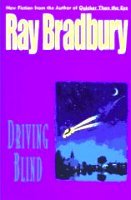
Driving Blind

This 1997 collection is uneven and at times weak. There is less fantasy or science fiction than in many of Ray Bradbury’s earlier works.

In the short story “Remember Me?” we find the theme of meeting a familiar face in a distant place.

The theme of children’s storytelling and kissing games is found in “House Divided”.

The theme of looking up an old flame is in “I Wonder What’s Become of Sally?”

And one of my favorite themes, the revenge of the nerd everybody picked on is the theme of “The Highest Branch on the Tree”.

The book has some terrific moments. Examples are when Bradbury recalls a tiny, dusty, moth-eaten Mexican circus, tells the hilarious story of Irish drinking buddies looking for a safe place in the bogs to take a woman, and yet another tale of perfect love squandered (“Madame et Monsieur Shill”).

If you’re new to Bradbury, this will do nicely, but for veteran readers it’s a bit of same old same old. I guess Bradbury needed another paycheck to allow this to be published. It is not bad, but this is not his best work.

Green Shadows, White Whale: A Novel of Ray Bradbury’s Adventures Making Moby Dick with John Huston in Ireland

Loosely based on the period in 1953 when Bradbury lived in Ireland and worked on the screenplay of “Moby Dick” for film director John Huston. A series of terrific set-pieces (such as, “The Terrible Conflagration Up at the Place,” “The Cold Wind and the Warm,” and “The Anthem Sprinters”) are strung together with accounts of the writer-narrator’s meetings with the director, and incidents of the latter’s casual cruelty and unreasonable demands. But the set-pieces, embedded in a 1992 volume, date from the mid-1970s and before, and one might have preferred a more direct, detailed portrait of Huston and Bradbury instead of this recycled collection. But if one has never read any Bradbury before, this is as good a place to start as any, particularly for its rich, entertaining portrait of Ireland and the Irish. Read by Jimmie A. Kepler.

The Toynbee Convector

I first read this collection of short stories in 1992. It includes a reprint of the 1983 story that appeared in the January 1984 issue of “Playboy.” It has twenty-two other stories. The majority are reprints from magazine articles. I nominate the short story of “The Toynbee Convector” for the best fantasy/science fiction story ever written. It is as good as Bradbury’s story from his 1951 book the “Illustrated Man – “The Veldt”. It is that good. Here is the story plot/summary. The story’s protagonist claims to have returned from the future. He has tapes and films of a miraculous technological wonderland. Humankind has solved all its major problems – no cancer, no world hunger, etc. This energizes the world with confidence. People believe that their dreams will come true. They proceed to build that future. They have no idea it is all a lie. The lie pictures a wondrous future. It describes this future in breath-taking detail. There is almost an action plan with hints as to how to get there. The world’s brain trust of scientists, economists, and politicians take the clues and make this future a reality. It comes the day when we are at the time and place where he is to appear from the past in the created future. A major deflection occurs. You have to read the story for the conclusion. It is worth reading. While the other stories in the collection are good and “worth the read,” none match the opening story.

Something Wicked This Way Comes

Something Wicked This Way Comes by Ray Bradbury is the story of two boys, James Nightshade and William Halloway. It is the story of the evil that grips their small Midwestern town with the arrival of one Autumn midnight. It tells how the boys save the town. It is great reading.

Ray Bradbury excels in revealing the dark side in us all, teaching us ultimately to celebrate the shadows and not fear them. In many ways, this is a companion piece to his joyful, nostalgia-drenched Dandelion Wine, in which Bradbury presented us with one perfect summer as seen through the eyes of a 12-year-old. In Something Wicked This Way Comes, he deftly explores the fearsome delights of one perfectly terrifying, unforgettable autumn.

Fahrenheit 451

The genesis of Fahrenheit 451 is in Ray Bradbury’s The Martian Chronicles where he has the story on book burning. Written in 1950 this book is as relevant today as it was when it first went into print.

The book is about political correctness and burning those books that make certain groups feel bad about themselves. The fireman in Bradbury’s book don’t put out fires, they start fires. They search out and burn books. It is a crime, in this society, to own or read books. It is not a society I would want to live in.

Knowledge is evil. People receive all of their culture through television walls that are built into their houses.

Guy Montag is a fireman who loves his work. He likes nothing better than to spray kerosene on a pile of books and watch the pages curl and turn into flakes of black ash that flutter through the air. Until the day he meets Clarisse, a young girl who has been told about a world of books, thoughts, and ideas. Their conversations precipitate a crisis of faith in Guy, and he begins to steal books and hide them in his home.

His wife discovers what he is doing. She becomes terrified. She turns him in. He is forced to burn his beloved collection. Guy flees to avoid being arrested. He joins an outlaw band of scholars who are trying to keep the contents of important books in their heads.