Not Everyone Thinks Being a Writer is a Good Idea

One of the extraordinary challenges you’ll face as a writer is the opinion of others toward writing as a profession.

You’ll face varied reactions from friends, family, day job coworkers, acquaintances, want to be writer friends and even members of your writer’s group when you are a writer.

A few people will say that’s nice. Some will start telling you about their great American novel plan. They may even offer to share the millions of dollars you can make together if you’ll just write the book using their idea.

im-a-writer-10-things-not-to-say

You will find others not seeing you as a real writer if you don’t flesh out their vision of a writer. These are the people who talk about writing, but rarely or never put their behind in a chair and write. They only see the real writer as a person with a print book, who goes from book store to book store doing book signings or doing interviews. Of course, someone else has set up all the interviews and book signings. All they do is leave their five-star hotel room and ride the limo to the event.

Author’s Earning $1,000,000 or more per year.

“As of May 5, 2016, only three Big Five authors who debuted in the past five years are currently making a seven-figure run rate from their Amazon sales—print, audio, and ebook combined. On the other hand, 14 indies who debuted in the same time period are right now doing the same.”

Author’s Earning $100,000 or more per year.

“1,340 authors are earning $100,000 per year or more from Amazon sales. But half of them are indies and Amazon-imprint authors. The majority of the remainder? They come from traditional publishing’s longest-tenured ‘old guard.’

“Fewer than 115 Big Five published authors and 45 small or medium publisher authors who debuted in the past five years are currently earning $100,000 per year from Amazon sales. Among indie authors of the same tenure, more than 425 of them are now at a six-figure run rate.”

Author’s Earning $25,000 or more per year.

“More than 4,600 authors [are] earning $25,000 or above from their sales on Amazon.com. Forty percent of these are indie authors deriving at least half their income from self-published titles, while 35 percent are Big Five authors deriving the majority of their income from Big Five published titles, and 22 percent are authors who derive most of their income from titles published by small- or medium-sized traditional publishers.”

“The vast majority of traditional publishing’s midlist-or-better earners started their careers more than a decade ago. Their more recently debuted peers are not doing anywhere near as well. Fewer than 700 Big Five authors and fewer than 500 small-or-medium publisher authors who debuted in the last 10 years are now earning $25,000 a year or more on Amazon — from all of their hardcover, paperback, audio and ebook editions combined. By contrast, over 1,600 indie authors are currently earning that much or more.

Source for the above: http://authorearnings.com/big-five-may-2016-ebook-pricing/

Why so much mention of money?

Too many people use the financial bottom line as the reason to measure success or their reason for writing. They expect to write one book and make a million dollars.

Could it happen? Yes. Is it likely to happen? No.

Others want to see their name on the spine of a book or byline in a magazine. I confess it feels good to see either or both.

Why a person writes is personal. Here’s my story when I first shared my dream of becoming a writer.

My Story.

Summoned to my high school guidance counselor’s office, I learned not everyone thinks being a writer is a good idea.  I still recall the meeting as if it were yesterday.

“What are you going to do now that you failed your physical due to bad vision and you can’t use your appointment to the United States Air Force Academy,” asked my high school guidance counselor.

“I’m going to be an author,” I said.

“You can’t be an author,” she replied.

“Why can’t I be an author?” I asked. I wanted to be the next Kurt Vonnegut, Philip Roth, or Ray Bradbury. They were the best-selling authors of the day.

Her career choices for me came from the father role models on the popular television programs of the era. She wanted me to be the next Mike Brady (the architect dad on The Brady Bunch) or an aerospace engineer like Steven Douglas (My Three Sons).

“Jimmie, you’re a boy. You need a college degree in engineering, math, science, or accounting. You have to earn enough money to support your future wife and family. Forget your silly notion that a man can support himself by writing. It is okay to write for a hobby, but you will need a real job. With your grades and SAT scores you could aspire to be a doctor, dentist, or lawyer,” she said.

I was heartbroken.

Raised to believe I could do anything, because of my high school guidance counselor now I wasn’t so sure.

Has anyone ever laughed at your vision of writing?

Perhaps you have been told you lack life experience or you don’t stand a chance because everyone is writing now that they can simply self-publish on Amazon.

You may have feelings of doubt, thinking if only you had an MFA. If only your family and spouse supported you more. If you could quit your day job. Maybe you are in your sixties like me. You think it is too late. You say I am just too old. If only…

We all experience self-doubt. Friends and family do not always understand our passion.

Everyone faces such challenges. My faith as a Christian also helps me overcome such thoughts. Here are a few lessons I’ve learned.

Some people will never understand your passion for writing. Don’t bother trying to explain. Just let them watch as you write.

Read.

Reading is necessary for writing. Not only is reading the fodder for writing, it is fun. It also helps me relax as well as grow.

Write.

I know it sounds silly, but to become a writer you have to write. I have heard for years that it takes 10,000 hours to master something. 10,000 hours is five years worth of forty-hour weeks. Maybe that is why it takes ten years for so many to get that first traditional book deal. Do not be a want to be a writer. Write.

Edit.

This includes proofreading, rewriting, and polishing. No one is perfect. Critique groups help as well as reputable professional editing services. Rewrite as needed.

Submit.

To your surprise, someone may like and buy what you wrote.

Rejection.

Being rejected is not personal. Your writing may be bad. It may be good, but just not meet the publisher’s or editor’s needs. You may have submitted to the wrong market or not followed the submission guidelines (both guarantee a rejection). Every writer gets rejections. I have been rejected by the best. My rejections include The New Yorker Magazine, Asimov’s Science Fiction, and Poetry Magazine.

Acceptance.

Selling a book or an article doesn’t guarantee success. Many times it means the real work is only beginning. Having your work accepted by a publisher feels good. It feels very good. Then comes the question, can you do it again?

Writers’ Groups.

Consider joining a writers’ group. I have belonged to three over the years. I have changed groups as I have changed. Some groups I have belonged to were for critique. Some have been to learn the business of writing. Some have been for the encouragement.

I know the thoughts I have shared are all items you have heard many times before. Sometimes a reminder is good. See the comments on dollars from Author Earnings may even be scary.

Don’t let the negative thinker stop you from chasing your dreams.

We all have people like my old high school guidance counselor in our lives. Do not let their negative words keep you from writing. If you have the urge to write, write! It’s not too late.

The formula really is simple. It is read, write, edit, rewrite, submit, and repeat. If your writing is good enough and if what you write matches the publisher’s need, you just may see your story in print.

Parts of this article were originally published in the June 30, 2014 issue of Author Culture.

Iamge source: https://jcarsonwrites.files.wordpress.com/2015/03/im-a-writer-10-things-not-to-say.jpg?w=698


Chasing the Dream

cam00043

Hello, I’m Jimmie Aaron Kepler. I’m an author, poet, and chase the brass ring with the dream of quitting my day job where I can write full time. I call jimmiekepler.com “Kepler’s Coffee House.”

Why would I select “Kepler’s Coffee House” for the name of my blog?

I write almost every day at my favorite coffee house! I’ve been doing it for several years. I’m the first one there in the morning as they unlock the doors. My coffee house as I like to call it is located halfway between my home and my day job.

I commute twenty-one miles each way every day, Monday through Friday. At about the ten-mile mark I stop at my select Starbucks at 6:00 AM. I am there every day at the same time. Being at my writing table allows my muse to know when and where to find me.

I write for forty-five to seventy-five minutes and then head on to the day job. Like most people, I need the day job to have money to live and to provide health insurance.

I’m not saying you have to mirror what I do. I am saying that you need to write on a regular basis. Writing in the morning allows me to give my best to my writing. I write before the cares and responsibilities of the day clutter my mind.

Remember, it’s not where you write or when you write that matters. What is important as an author is writing. And with my stick-to-it-ness, I just may be one of the lucky persons who transitions from a day job to writing as my day job.

Yes, I’m chasing the dream. I’ve been chasing it for some years. I think I’ll make it because I won’t quit. I’ll pay the price. And just maybe, I’ll get the brass ring.

A Vison for Writing

visionDisclaimer: This article talks about religion in general and the Christian faith, in particular. Psalm 118:17 says “I shall not die, but live, and declare the works of the Lord.”

Christian Writer or Writer Who Is a Christian?

Not all writers who are Christians are called by God to a full-time writing ministry or to write in the inspirational genre. Let’s be honest, not all authors write about God, Jesus or Christian themes.

People write about a variety of subjects. Writers write about what they know or what interests them. I know that is the way I do it.

Not all Christians actively practice their faith and beliefs. Many have struggles with their faith.

I consider myself a writer who is a Christian, not a Christian writer. My faith affects all areas of my life. It slips into my writing most of the time. Sometimes I even do it on purpose!

It’s Okay to Encourage Others Toward Trust in Christ.

Psalm 118:17 is in an account where the psalmist reminds us we should conscientiously do our duty to all, and trust God to accept and bless us. It says we should seek to live to declare the works of God.

It’s okay for a Christian writer to encourage others to trust in Him, serve Him and live for Him. Such were the triumphs of the Son of David, in the assurance that the good pleasure of the Lord should prosper in his hand.

Commit Our Works to the Lord.

We should commit our works to the Lord. Try praying for a vision for your writing, to God to give you the desire to write, and to open doors of opportunity for you to write.

If you are a Believer in Christ, you can then “declare the works of the Lord.” Include your faith in your writing just like you do in your everyday life.

Do Not Hold Back

In the late former Beatle George Harrison’s autobiography “I, Me, Mine” he mentioned he did not hold back in promoting his Hinduism faith and the Hare Krishna movement with songs like “My Sweet Lord”. He viewed his celebrity as a way to support his beliefs.

Include Your Faith in Your Writing

Why shouldn’t a Christian include faith in his or her writings? Again, Psalm 118:7 says “…declare the works of the Lord.” Habakkuk 2:2 declares “And the LORD answered me, and said, Write the vision, and make it plain upon tables, that he may run that readeth it.” The key is the writer needs to write. Your faith is part of who you are.


This article originally appeared in the February 11, 2015 issue of Author Culture


clean shavenJimmie Aaron Kepler is a novelist, poet, book reviewer, and award-winning short story writer. His work has appeared in over twenty venues, including Bewildering Stories and Beyond Imagination. When not writing each morning at his favorite coffee house, he supports his writing, reading, and book reviewing habit working as an IT application support analyst. He is a former Captain in the US Army. His blog Kepler’s Book Reviews was named a 100 best blogs for history buffs. You can visit him at http://www.jimmiekepler.com.

Walk in a Manner Worthy of Your Call to Write

256px-Bible_Johns_Gospel_3_16Maybe you are a Christian writer whose drive is sharing Christian themes for the mainstream market. Your goal may focus on writing to develop Christian Believers. Whatever your motivation, “walk in a manner worthy of the calling to which you have been called,” Ephesians 4:1b.

Ephesians 4:1-6 (English Standard Version) says,

I therefore, a prisoner for the Lord, urge you to walk in a manner worthy of the calling to which you have been called, with all humility and gentleness, with patience, bearing with one another in love, eager to maintain the unity of the Spirit in the bond of peace. There is one body and one Spirit—just as you were called to the one hope that belongs to your call—one Lord, one faith, one baptism, one God and Father of all, who is over all and through all and in all.

These verses give five guidelines that will help you: Walk in a Manner Worthy of Your Call to Write

Guideline One: Humility – “to walk in a manner worthy of the calling to which you have been called, with all humility” – Ephesians 4: 1b—2a

As a Christian writer you should be full of Jesus, not self. The temptation is to be full of ourselves. When this happens, we are at risk of treating others with contempt, of coming across as preachy.

Guideline Two: Gentleness – “to walk in a manner worthy of the calling to which you have been called, with all humility and gentleness, with patience,” Ephesians 4: 1b- 2a

As a Christian writer you should be bold, but under control. This does not mean to be a wimp. Just as a powerful race horse is under the control of the jockey, as a Believer we need to be under the control of the Spirit of the Living God. Share the love Jesus and his teachings without beating the reader over the head with the Holy Bible.

Guideline Three: Patience – “to walk in a manner worthy of the calling to which you have been called, with all humility and gentleness, with patience,” Ephesians 4: 1b- 2a

As a Christian writer we need to trust God believing His word would come true. We need to keep on keeping on. We need to accept the fact that it takes time to develop our writing craft.  “The Lord is not slow to fulfill his promise as some count slowness, but wish patient toward you, not wishing that any should perish, but that all should reach repentance.” — 2 Peter 3:9

Guideline Four: Forgiving Love – “to walk in a manner worthy of the calling to which you have been called, with all humility and gentleness, with patience, bearing with one another in love,” – Ephesians 4: 1b – 2.

As a Christian writer, we need to realize Christian love covers a multitude of sins. We should write with a love that loves no matter what. We have all heard it said “hate the sin, love the sinner.” That is exactly what we must do as writers. After all, as a Christian you are, by grace saved through faith … it is the gift of God.  Ephesians 2:8-10

Guideline Five: Unity If the Spirit in the Bond of Peace – “eager to maintain the unity of the Spirit in the bond of peace.” – Ephesians 4:3 English Standard Version

Guideline five is the sum of points one through four. All four points equal a bond of peace. We are bearing one another in love. Our writing should share and bring people to Christ, not drive them from Christ. “There is one body and one Spirit—just as you were called to the one hope that belongs to your call—one Lord, one faith, one baptism, one God and Father of all, who is over all and through all and in all.” – Ephesians 4:4-6 (English Standard Version).

We need to realize it is not a geographical or a denominational thing; it is a Jesus and a God thing.


This article originally was published in January 12, 2015 issue of Author Culture.


clean shavenJimmie Aaron Kepler is a novelist, poet, book reviewer, and award-winning short story writer. His work has appeared in over twenty venues, including Bewildering Stories and Beyond Imagination. When not writing each morning at his favorite coffee house, he supports his writing, reading, and book reviewing habit working as an IT application support analyst. He is a former Captain in the US Army. His blog Kepler’s Book Reviews was named a 100 best blogs for history buffs. You can visit him at http://www.jimmiekepler.com.

Why this Former Pantser is Now a Plotter

PantserPlotterWhen I wrote my first novel, I sat down at my computer and waited to be surprised by the story that unfolded. I had no idea how the story would unveil. I was writing by the seat of my pants (the definition of Panster). I never knew where I was going before I got there except for knowing the final destination. I loved the surprise of traveling where my characters led me. I loved the joy of the journey.

The joy disappeared as I started pitching the book. I learned the agent wanted a one to three-page synopsis of my story in addition to sample chapters. Some required an outline and chapter summaries. It seemed no two wanted the same thing.

Sometimes I pitched to a publisher or editor at a writer’s conference. I would get excited when they said yes to look at my book. I found them requesting a chapter-by-chapter outline plus a three to five sentence synopses of each chapter. They wanted to know about the chapters in detail including a synopsis of each scene in the chapter. The work of putting the information together was harder for me than writing a book.

I found myself having to go back and make an outline of the book. The detail needed included information on the scenes just to get it considered. At this point, I decided I would outline the next novel I wrote. I could change the outline if I felt the need to change directions, but I would not have to go back and create an outline from a 300-page manuscript.

While your experiences may be different, mine motivated me to outline first. My goal is to chase away some of those misconceptions about what it means to plot a book beforehand. I view outlining as a work saver.

I Find An Outline Forces Me To Focus. 

As I worked on my book I created these fantastic characters, put them in a rousing venue, and gave them all kinds of amazing things to do. When you begin the story, you are probably like I was – excited. You cannot wait to get the story from your head to the page.

I found writing an outline forces me to take a get a clear focus on my vision. I ask myself what is the tale I want to tell? It also helps me determine what the tension is between characters. I think about and plan for the conflicts and resolution. I determine how the antagonist and protagonist will develop and change during their journey.  As I have said, I can go back and change the outline if I fell the need to adjust directions in the course of writing a story. An outline makes you think about the details early.

I Find An Outline Helps Reduce My Fear of the Size of the Task.  

Writing a book can be a frightening undertaking. You may wonder how you can ever create 300 pages? You may ponder if you can hang in there long enough to reach the end.

Think of an outline as a roadmap. It helps you remember that you do have an objective in mind.  The first work of length I wrote was a doctoral dissertation. The proposal had to be approved with a detailed outline before I wrote the first sentence. The outline not only kept me on track, but it was the beacon that led me to my destination. The same idea works with fiction or nonfiction book.

I Find An Outline Helps Me Maintain My Equilibrium. 

An outline helps me decide if I have the right balance of parts in my story. Do I have a balance of historical events and relationships or does the history overwhelm the characters?  Is my western really a western? Are the science details overwhelming the story in my science fiction?

I Find An Outline Helps Me Plot. 

Outlining makes me determine what is going to what happens in the beginning, middle and end of my book. The specifics of those happenings may be adjusted in the progression of writing a book. The outline gives me the framework of my storyline. Knowing the ending helps me point the story in that direction.

Writing the outline puts the conclusion in my mind. I find that as I write my story, my subconscious is always coming up with new and exciting ways to shove my characters toward their failures, trials, and successes.

I Find An Outline Prevents A Weak Middle Third of the Book.

When I write an outline, I quickly find out if I have sufficient action and conflict to support the middle third of my book. You do not want the middle to stretch between the beginning and end of your story like Interstate 15 stretches between the population centers of southern California and Las Vegas, Nevada. If you are not familiar, the highway crosses miles of desert including Death Valley. You want something there in the middle that keeps them moving along as your readers travel through your story.

An outline gives me a chance to think about and reflect on conflict and character development to make that middle an interesting, important part of my book. While you can do the same thing as you write your story, having an outline helps keep the story progressing and lessens the chances of the dreaded writer’s block.

I Find An Outline Helps Me Write Faster. 

When I know what is going to happen in a scene or chapter I simply sit down and write a scene or chapter. I do not sit wondering what I will write about. I have already made that decision. I only sit in my chair and do my writing assignment for the day.

I found with an outline I wrote book two in a quarter of the time it took me to write book one. And I did that having a day job that when my commute is added to it takes twelve hours of my day five days a week!

Closing Thoughts

Every author has an approach that works best for them. I have found an outline works better than writing by the seat of my pants.

Some writers use their synopsis (narrative overview of the story) as an outline. Other authors write a summary of each chapter or each scene including the action takes place in that scene or chapter. That is what I do. Here is an example from my current work in progress:

Chapter Two – Supreme Commander of the Unified Peoples Planetary Expeditionary Force (UPPEF) sends Harry to Mars to inspect the damage

1. Scene One: Supreme Commander of the UPPEF recognizes Harry’s sadness. He learns of and understands what caused the melancholy.
2. Scene Two: Supreme Commander of the UPPEF sends Harry Ashworth with letters from himself, Chancellor Wilson, and a commission to The Bradbury Burroughs Rain Dome
3. Scene Three: Harry Ashworth, to the grief of Martian based UPPEF comes to the Rain Dome
4. Scene Four: Harry Ashworth views the ruins of the Rain Dome secretly.
5. Scene Five: Harry Ashworth incites the citizens to build.

I use the writing software program Scrivener. I use the “notecards” in the view mode. I do one card for each chapter in the book. I write a synopsis of the chapter and then list the scenes in the chapter. I also use the cards to write a description of my characters.

Well, without boring you with more mind-numbing details, I will challenge you to consider outlining if you have not tried it. If the idea scares you, try it for just one chapter or even one scene. If you do not have a clue what to outline, just ask your characters to tell you what they are going to do next. They will tell you.

You may find you can write faster, with fewer holes and empty spaces in you story if you outline.  Like me, you too may become a former pantser who is converted to be a plotter.


Photo credit: http://www.karentyrrell.com/wp-content/uploads/2015/12/PantserPlotter.jpg


This article originally appeared in Author Culture on Wednesday, November 5, 2014


clean shavenJimmie Aaron Kepler is a novelist, poet, book reviewer, and award-winning short story writer. His work has appeared in over twenty venues, including Bewildering Stories and Beyond Imagination. When not writing each morning at his favorite coffee house, he supports his writing, reading, and book reviewing habit working as an IT application support analyst. He is a former Captain in the US Army. His blog Kepler’s Book Reviews was named a 100 best blogs for history buffs. You can visit him at http://www.jimmiekepler.com.

Family Reunion

Smoky Mountains - Missionary Baptist Church 3

Family Union

The setting was an old wood framed church house.
Built on the crest of a gently sloping tree-covered hill.
Its wood siding all faded and weather-worn.
The brass church bell for years had been still.

He walked up the hill to the church house.
With each step, old long-past years reappeared.
Soon in his mind, he could hear the congregation singing.
Then down his cheeks streamed the warm, wet tears.

Once again, the old song leader was his grandpa.
His young Mama on a pump organ played.
Packed on the third pew were his mischievous boy cousins.
Standing by the back door to the music his dear daddy swayed.

And old remembrances flooded his being.
A grand family reunion was well underway.
Hearing again the stories of King Jesus,
He couldn’t hold the tears at bay.

Then he moved from the little wooden church house.
Walked down the hill on the path just ahead.
The music and memories slowly fading in the distance.
He arrived at a cemetery with the graves of his family long dead.

There will be a great reunion in heaven in the future,
They’ll all be reunited one wonderful day.
They were all Believers in Jesus,
He’s the Light, the Truth, and the Way.

Jimmie Aaron Kepler
December 2015


Picture Credit: Jarek Tuszynski / CC-BY-SA-3.0 & GDFL [CC BY-SA 3.0 or GFDL], via Wikimedia Commons

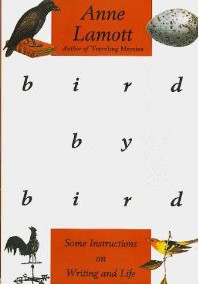
Bird by Bird: Some Instructions on Writing and Life by Anne Lamott

Bird by Bird
Bird by Bird

Why would I review a twenty years old book? Why select a book that most writers have read? Those are great questions. 

The answer is simple. While first published in 1995, “Bird By Bird: Some Instructions on Writing and Life” by Anne Lamott is as relevant today as the day it was released. The book has become a definitive how-to guide for new

and aspiring writers. The book has been a national best seller. It continues to have excellent sales. As of 3/5/2015, twenty years after publication it still ranks #958 on Amazon.com’s overall best sellers rank. More amazingly it ranks:

#1 in Books > Reference > Words, Language & Grammar > Speech

#1 in Books > Reference > Writing, Research & Publishing Guides > Writing > Journalism & Nonfiction

#1 in Books > Textbooks > Communication & Journalism > Journalism

I don’t know about you, but I would love to have a book with as consistent a sales history as “Bird by Bird.” Let’s take a more in depth look at this beautiful little book.

An entertaining and helpful guidebook that covers every step of the writing process, the reading of “Bird By Bird” has become something of an initiation for hopeful writers. Anne Lamott drives home the point of the need for regular writing and facing the fact that getting published will almost certainly not make you more contented, wealthier or good-looking. An entertaining and helpful guidebook that covers every step of the writing process, the reading of “Bird By Bird” has become something of an initiation for hopeful writers. Anne drives home the point of the need for regular writing and facing the fact that getting published will almost certainly not make you more contented, wealthier or good-looking.

Her book’s genesis comes from the notes of the lectures Lamott delivers to her writing classes. The book begins the way all writing classes do – sit down and write. Write, write, and write and the revise and rewrite before you worry about agents, book titles, etc. She reminds us to sit at our computer, bring up our word processing program, stare at the screen and write. She gives practical advice on not looking at the size of the task but viewing it as a series of small assignments.

Lamott investigates the depths of the formal elements of writing such as plot, character development, dialog, setting, and point of view. She also examines the infinitely more injurious obstacles facing a writer. That is acceptance the “[expletive deleted] first draft” and killing the perfectionist inside you standing between you and your shitty first draft.

  • She talks in practical terms about defeating writer’s block and what to do when you have crises of faith.
  • She talks about finding a sturdy soul to read your “[expletive deleted]” draft and not being devastated when the reader has more than a few suggestions.
  • She also touches on the subject of learning to deal with professional jealousy, a bound to happen fate “because some wonderful, dazzling successes are going to happen for some of the most awful, angry, undeserving writers you know — people, who are, in other words, not you.”

“Bird By Bird” isn’t all that ground-breaking a book. I have read similar works providing insights on the writing life by authors Annie Dillard and Natalie Goldberg. Ask anyone in the position to make a comparison and more likely than not they’ll say “Bird By Bird” surpasses all. “What, then, is it about “Bird By Bird” that strikes a chord with so many readers and writers?” to quote a question asked by reviewer Sarah Brennan.

Anne Lamott’s advice is all harvested from personal experience. Her guidance is caring, keen and so good-naturedly explained it’s readily employable. I agree again with Sarah Brennan that “ultimately, it’s her uncanny and self-effacing humor, natural, unaffected tone and anecdote-as-life-lesson adeptness that make Bird By Bird such a useful teaching device. Hers is a refreshingly conversational, approachable, enjoyable didacticism that leaves you with the feeling that if you were to meet Lamott, you’re pretty sure you would be instantaneous best friends however far you descend into the pits of frustration, self-loathing and despair, the writing life is worth it.”

Anne Lamott gives us all hope as she shares, “Even if you only show the people in your writing group your memoirs or stories or novels, even if you only wrote your story so that one day your children would know what life was like when you were a child, and you knew the name of every dog in town — still, to have written your version is an honorable thing.” It would be fun to sit down for a day and talk and laugh with Anne Lamott.

Maybe if we learn some of the lessons from “Bird By Bird” someone will read or maybe even review our book twenty years after publication. You never know, it just might happen.


Jimmie Aaron Kepler

Jimmie Aaron Kepler’s work has appeared in six different Lifeway Christian publications as well as The Baptist Program, Thinking About Suicide.com, Poetry & Prose Magazine, vox poetica, The Dead Mule School of Southern Literature, Bewildering Stories, Beyond Imagination Literary Magazine and more. His short story stories The Cup, Invasion of the Prairie Dogs, Miracle at the Gibson Farm: A Christmas Story, and The Paintings as well as Gone Electric: A Poetry Collection are available on Amazon.com.

On Writing: A Memoir of the Craft


On Writing: A Memoir of the Craft

Stephen King wrote “On Writing: A Memoir of the Craft” about his learning and living the craft of writing. The informal conversational style makes the book enjoyable. King organized the book in three sections.

Section One

Autobiographical describes the book’s first section. It centers the content on his early exposure to fiction. His first attempts at writing began in elementary school. The journey begins in the family basement with the story of his writing for his brother’s mimeographed newspaper. King was next editor of his high school paper in his sophomore year in high school. The high school administration tells him to accept a job at the local newspaper by the school faculty after he wrote a satire newsletter about the school faculty.

A nail on his bedroom wall holds his rejection slips. He shares how and what he learned from the rejections as he recalls the tales of his early tries to get published.

The adventure continues to the University of Maine, where he majors in English, meets his wife, and transitions to adulthood. We learn how his teaching high school English and his summer jobs played a role in his breakthrough success with the novel Carrie ($2,500 advance on the hardcover release and $400,000 for the paperback rights), and his later development as an author.

King also discusses his problems with drugs and alcohol. He shares how his wife has played a major role in his personal and writing life. From the book, you can tell he loves and respects her very much. She plays a key role in his life.

Section Two

No-nonsense instruction on writing describes section two. It covers everything from tips on grammar to ideas about developing plot and character. King uses this section as a guide for “how a competent writer can become a good one.” Stresses his beliefs that a writer should edit out unnecessary details, he also points out words how one should avoid words ending in “ly” and adverbs. We learn how he writes first drafts and second drafts.

Section Three

Epilog describes section three. Recalling the 1999 accident where a van struck and injured him during his afternoon has you as an eyewitness to the event. We learn the van driver was trying to keep his Rottweiler dog out of an ice chest of raw meat while not paying attention to his driving. King describes his brush with death. We learn about his painful recovery. He tells of his struggle to write again.

I recommend purchasing and reading the book. It is also available on audiobook.

Book Reports, Essays and Term Papers

Examination Blue Book

My late mother used to say I wanted to be a writer since I was three years old. I’m not sure that’s accurate. However, I cannot ever remembering not wanting to write.

Mom says I told stories even before I could write. I don’t know about that. I remember how excited I was when in the fifth grade at Jefferson Avenue Elementary School in Seguin, Texas. Mrs. Englebrock, which was my teacher, had us read books and then write a story telling what we read. I thought that was the neatest thing. Read the book, write a report about what we read, and if we were one of the lucky ones, we could stand before the class and read our report!

I liked that part as all the kids were looking at me I wanted to make the book sound so interesting every boy and girl would be dying to check it out of our little school’s library. I seemed to do a good job of my report writing. I would always mention something I just knew those girls would like. At the same time, I found something I knew the other fifth-grade boys would enjoy.

I used to take some of those book reports and turn them into plays that I performed with my brother and the neighborhood kids. It was such fun.

When I was in college and graduate school, I use to select professors by the criteria if they gave an essay test using examination blue books or multiple choice tests. I found the multiple guess test as I called them boring. An essay on the other hand allowed me to show what I knew. I enjoyed doing the research or term papers as well as doing book reports. If a professor gave essay tests, required two or three book reports and made you do a term paper, I would sign-up for the class. It was as if I had won the trifecta at the race track!

Mother was correct about one thing; I do like to write.

Library and Library Cards

In my mind, it’s Saturday, September 11, 1964. My family had just moved into base housing on Biggs Air Force Base in El Paso, Texas. Dad had my little brother and me got in our beautiful metallic turquoise 1964 Ford Galaxy 500 car. Our destination was the base library. We have set off on a short drive to get my brother and me our first library card.

The librarian was unlike anyone I had ever met or seen. The kids called her the “bun lady.” She wore the stereotypical hair in a bun. She kept her spectacles on a chain, infrequently wearing them. Her work uniform was a long covered up dress. She always had a worried expression. Her right arm had a nervous twitch where her hand frequently jerked toward her mouth and the pointer finger extended across her lips to signify “Shush!” It seemed “shush” was the most common word she spoke.

The “bun lady” gave us a tour of the library. We had the Dewey Decimal System explained. We visited the book stacks with the children’s, science fiction, history and biography books. She showed us the location of the “necessary rooms” as she called them in case we should need to do what all people do, but rarely admitted to doing, especially back in 1964.

I remember dad had us walk back to our house from the library. He made sure we knew the way home and made it safely.

We visited the library several times a week. It was a twenty-minute walk to the library. We always had adventures en route to the library, but not so much on the trip home. We couldn’t wait to get back to the house. At home, we could dip into the exploits between the book’s covers. Mother always had hours of quiet time after we returned with books.

I still remember how hush-hush the libraries were back then. It seemed all speech ended at the door. There were no computers in libraries in the 1960’s. No one was sending text messages or taking pictures on a cell phone. I can still hear the swishing of card catalog drawers being opened and closed, the squeak of the book cart’s wheels announcing the slow but sure restocking of shelves. They were some of my favorite sounds.

I recall all those book spines announcing the titles covered with the plastic covers. I would walk down the aisles looking, gawking. I would dream of my name being there – someday.

Suddenly, there they were. Ray Bradbury’s The Martian Chronicles and Dandelion Wine. I think I heard Handel’s Messiah’s Hallelujah Chorus when I found these books. I started reading both. I have been a fan of Bradbury and science fiction since that time.

I checked the books out. I still remember the “bun lady’s” pencil. It had a little stamp thingy attached to it instead of an eraser. There was a pocket glued in the front of the book. In it was a card. She took the card out of the pocket. Next, she wrote my name down on that card stamping it with the due date. She filed it away. She then stamped the due date on the slip of paper inside the pocket glued to the front page of the book. I had the books for two weeks. Two adventurous weeks!

At home, I would retire to my bedroom and read for hours. In my mind, I would be it the cupola orchestrating the lights of the town turning off at night. I would experience the rocket winter of traveling from Ohio to Mars.

I journeyed to all those places for free in books. The base library became a favorite destination for me. Libraries are still a place of refuge and solitude for me and hundreds of military brats.

I wrote my first published article in the library at The University of Texas at Arlington in 1974. On a rainy September afternoon in 1981 at Emory University’s library in Atlanta, Georgia I wrote the first draft of my first professional magazine article sale.

While today the Internet may bring information into my home, the library is still the sacred shrine for me and many writers. I was in the Los Angeles Public Library and the UCLA library a few years ago. I could see the Ray Bradbury of the 1940s inserting a quarter for another 30 minutes of typing in the pay typewriter. Those still existed when I was in college and seminary.

Nearly a decade ago I was in the Vicksburg, Mississippi Public Library and learned that Winston Groom (author of Forest Gump) was there researching a book on the Vicksburg Campaign of the Civil War.

Just last week I watched a video by Joanna Penn. She was showing where she writes in the London Public Library. She said this was the very spot where Charles Dickens wrote as well as Agatha Christie.

I still smile when I reflect on that Saturday in September 1964 when I got my first library card. I still have a library card. The library along with a bookstore are my favorite places to escape the world. I believe the library still holds a key role for the writer.

Originally published on March 2, 2015 on Author Culture.

Photo Source:

Creative Commons Licence

By Tammy (Flickr: library card)

This photo is licensed under a Creative Commons Attribution 2.0 Generic License.